

Read Ecclesiastes 3 as a poem and its continuation
Ecclesiastes 3 is often remembered for its opening list of times. Read verses 1–15 together before selecting a line for a note or a conversation. The poem moves between contrasting experiences, and the prose that follows asks about work, describes a limit to human understanding and speaks of receiving ordinary good as a gift. These parts belong in the same reading. The list gives you much more to notice when you carry it into the reflection rather than stopping at verse 8.
Begin with a simple division on paper: verses 1–8 on one side and verses 9–15 on the other. Leave space beneath each heading. Read the first part aloud without deciding which line best describes your present life. Then read the second part and note its questions and statements. At this stage you are tracing what the passage does. Personal reflection can follow once you have heard the change from the repeated lines to the voice considering them.
Use the chapter study guide to keep your observations together.
Give both halves of each pair room
The opening verse introduces the subject, and verses 2–8 arrange fourteen pairs. Read each pair before moving to the next. Planting appears beside uprooting; keeping appears beside casting away. Some actions look desirable, some painful, and some depend on circumstances. If you underline only the half you like, your marked page will no longer show the range of experiences the poem places together. Write both actions in a row, then record what makes them a contrast.
The Catholic USCCB notes describe the paired structure and connect it with limits on human knowledge of appropriate times. That is a useful specialist reading to compare with your own observations, rather than a replacement for them. On the page, check how often the language returns to time. Ask what the accumulation of pairs achieves that one isolated sentence would not. A reader may recognize a wide field of life here without being able to assign every event a reason or a date.
Read the Catholic USCCB notes on Ecclesiastes 3.

Worked reading: planting beside uprooting
1For everything there is a season, and a time for every purpose under heaven:
2a time to be born, and a time to die; a time to plant, and a time to pluck up that which is planted;
3a time to kill, and a time to heal; a time to break down, and a time to build up;
4a time to weep, and a time to laugh; a time to mourn, and a time to dance;
Read Ecclesiastes 3:1–4 in the World English Bible. In verse 2, note what happens to the plant in each half. The second action concerns what was planted; the line therefore holds beginning and removal together. Write an observation such as: the poem includes both establishing something and taking it out. Next distinguish that observation from an application about a particular project. The verse does not name your project, judge its condition or tell you that today is the day to abandon it.
Suppose a reader is deciding whether to continue a community garden. The image may help them acknowledge that continuing and ending are both possibilities. It cannot settle which choice is responsible. They would still need to consider the plants, the volunteers, the season and their commitments. Return to the verse after naming those facts. Your note might say that the poem widens the question you can ask, while the practical decision still needs evidence that the poem does not supply.
Read weeping and laughter without setting a deadline
Verse 4 gives weeping and laughter space in the same poem. Read both rather than using the second half to hurry past the first. Nothing in the line gives a number of days after which someone must stop grieving. The pairing also does not require a reader who is enjoying something good to manufacture sorrow. It names contrasting experiences within the larger range of the passage. Start by describing the contrast before deciding what you wish to say to another person.
If someone tells you the line matters to them, ask which part they are hearing. Let their answer shape the conversation. A verse can be meaningful without becoming an explanation of why a loss occurred. You can read alongside someone and admit that you do not know the cause or the duration of their circumstances. When writing a personal reflection, keep any wish for change distinct from a claim that the passage promises a particular change soon.

Worked reading: silence, speech and the next verse
7a time to tear, and a time to sew; a time to keep silence, and a time to speak;
8a time to love, and a time to hate; a time for war, and a time for peace.
9What profit has he who works in that in which he labors?
10I have seen the burden which God has given to the sons of men to be afflicted with.
11He has made everything beautiful in its time. He has also set eternity in their hearts, yet so that man can’t find out the work that God has done from the beginning even to the end.
Read Ecclesiastes 3:7–11 in the World English Bible. First locate the pair concerning silence and speech. Then follow the poem to its ending and continue to the question about work in verse 9. A useful note has two entries: the poem names both silence and speech; the following reflection asks what workers gain. Your observation should preserve the movement between them. It should not silently turn the first entry into a command to keep quiet in a specific difficult situation.
Imagine preparing for a conversation in which you have been speaking too quickly. The pair may prompt you to ask whether you have listened, what you actually know and what still needs saying. Now imagine witnessing a wrong that needs to be reported. The same pair does not cancel that responsibility. In either case, the verse alone does not identify the appropriate response. Record the circumstances beside your application, then check whether your proposed words take account of the person and the issue in front of you.
Pause over the question about work
After the repeated pairs, verse 9 in the World English Bible asks about the profit of labor. Read that question aloud and resist answering it before reading on. A list that can sound orderly is followed by someone considering what human effort gains. That change matters when the poem is presented as a recipe for managing every phase of life. The speaker is still examining work and its limits. The chapter has not become a schedule whose entries can be checked off.
Put a short question beside your two-column notes: what does the second part ask of the first? You might notice that working hard does not give a person complete control over outcomes. That is an interpretation to test against verses 10–15, not a reason to treat all effort as worthless. Read the later references to eating, drinking and enjoying good in labor. Keep the question and those statements together while deciding how you would describe the speaker's view of work.
Keep the limit in verse 11 visible
In the World English Bible, verse 11 places its account of God's work beside a limit on the human ability to comprehend that work from beginning to end. Read the entire sentence. If you copy only the opening into a notebook, add a reference to the rest so you can find the qualification later. An appealing clause can sound more complete than the verse itself. The second part stops the reader from claiming a view of the whole that the passage says people lack.
For a first reading, record the two claims separately and keep the reference beside both. You do not need to resolve every translation question before noticing that the verse speaks about human limits. If you compare another edition, copy its wording accurately and identify it. Different wording is a reason to read carefully, especially around a term that seems to carry a large idea. It is not permission to combine preferred phrases from several editions and label the result a quotation.

Notice what the passage calls a gift
Verses 12–13 turn toward life as it can be lived and good as it can be received. In the local World English Bible, read the wording about rejoicing, doing good, eating, drinking and enjoying good in labor. These are concrete actions and experiences after the acknowledgment of limited knowledge. Note that order. Receiving something good need not wait until a person can explain the whole course of events. The text can hold a limited perspective and an ordinary good together.
Try making a modest personal note: name one good thing actually available today and one action toward another person that you can consider responsibly. Keep the note proportionate. A shared meal does not prove that every difficulty is resolved, and gratitude need not be used to silence a complaint. The example simply gives your reflection a real object. If you cannot think of such a note now, leave the space open and return to the passage without forcing a cheerful ending.
Do not skip the uncomfortable pairs
The poem includes killing and healing, hatred and love, war and peace. Those lines prevent an easy summary in which every season is merely a pleasant change of scenery. Read the troubling words within the list, then continue into the surrounding chapter. Naming an activity in this poem does not by itself authorize a reader to carry it out. Nor does the chapter give a personal message identifying another person as someone you should hate. Any ethical claim needs more than a detached half-line.
When discussing the passage with others, make your level of claim clear. You can show that an action appears in the poem. You can propose an explanation for its place there. You can ask what other biblical passages contribute to an ethical question. Those are different tasks, and each needs its own evidence. If you want help tracing a particular line, use a context reading method rather than gathering isolated verses that simply repeat the word you are concerned about.
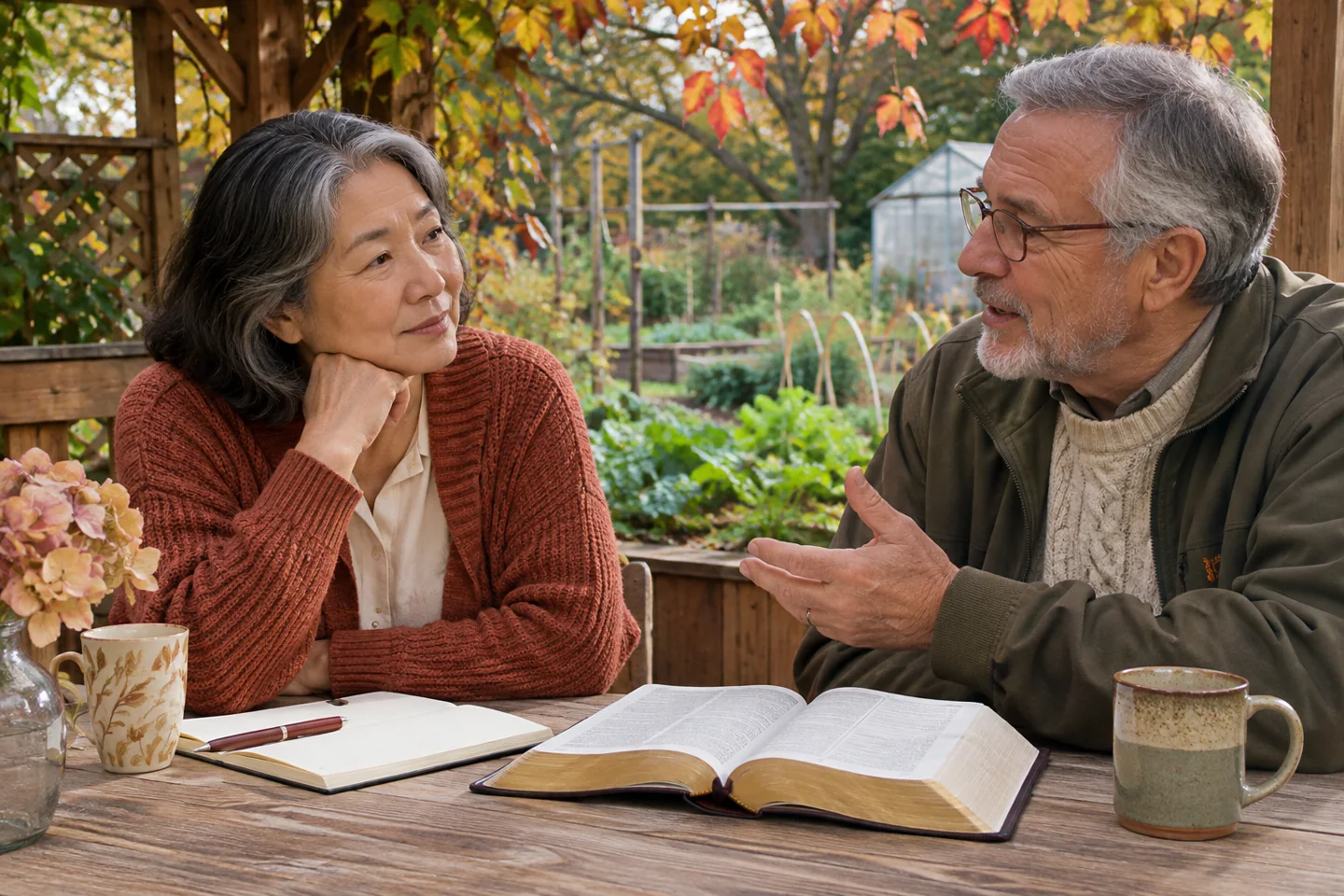
Finish with a reading you can explain
Set aside about twenty minutes for a final rereading. Spend the first few reading verses 1–8 aloud in complete pairs. Then read verses 9–15 and mark the shift to reflection. Choose one pair and write what the text actually names. Add a second sentence explaining what the continuation prevents you from assuming. For example, a contrast between planting and uprooting does not establish the timing of a decision you are making. Keep your personal example on a separate line.
Check your summary against the passage. Does it include both halves of the chosen pair? Does it acknowledge the question about work and the limit on knowing the whole? Does it leave room for the good described in verses 12–13? Before sharing the note, remove any claim that you know why a particular painful event happened. A careful reading can recognize the breadth of the poem, receive its questions and describe a present responsibility without pretending to possess the timetable of another person's life.
Practise reading a verse in context with its surrounding sentences.
Questions about the times poem
Does the poem tell me when to make a decision?
It names contrasting times without supplying your circumstances or a personal date. Consider the relevant facts when applying a line.
Why continue after verse 8?
Verses 9–15 examine work, limited knowledge and the good received in life. They belong beside the poem in your reading.
Does a time to hate authorize hatred?
The presence of an action in the poem does not by itself authorize a personal action. Read the context and distinguish observation from an ethical claim.
Which translation supplies the quotations?
The displayed passages come unchanged from the existing World English Bible data. The linked Catholic USCCB edition uses a different translation.