

What gleaning in Ruth 2 means
When you first read about gleaning in Ruth 2, it helps to picture two actions in the same field. The harvesters cut and gather the crop. After them, a person can pick up ears that are still on the ground. That distinction explains what Ruth asks for in verse 2. She wants to go behind the harvesters and bring back food. She has come to Bethlehem with Naomi, and the first chapter puts their arrival at the start of the barley harvest.
Read the episode as a day bounded by two conversations at home. Ruth asks Naomi before she leaves. In the evening Naomi asks Ruth where she worked. Between those conversations, nobody can take the grain for granted. Ruth has to find a place, work there, and carry the result back. On a first pass, put a small mark at each change of place. Save questions about the later marriage or family line for the chapters where the book actually takes them up.
Read the harvest provision before the field scene
The instructions in Leviticus 19:9–10 give readers a point of comparison. Harvesters are to leave the edge of a field and what falls during harvest for people in need and for the foreigner. Deuteronomy 24:19–22 gives related instructions about a forgotten sheaf, olive trees and grapes. Before returning to Ruth, write one phrase for the person who controls the harvest and one for the people who need access to what remains. The guide to Leviticus places those instructions within the book.
This background makes a practical difference. In a careful note, distinguish the general obligation to leave something available from the action Ruth still needs to take. An instruction to landholders tells you what ought to be left. It leaves you to learn from the story whether Ruth can gather safely and what happens when she asks. Mark that as a question as you go back to Ruth 2. You will have several separate answers by the end of the chapter.
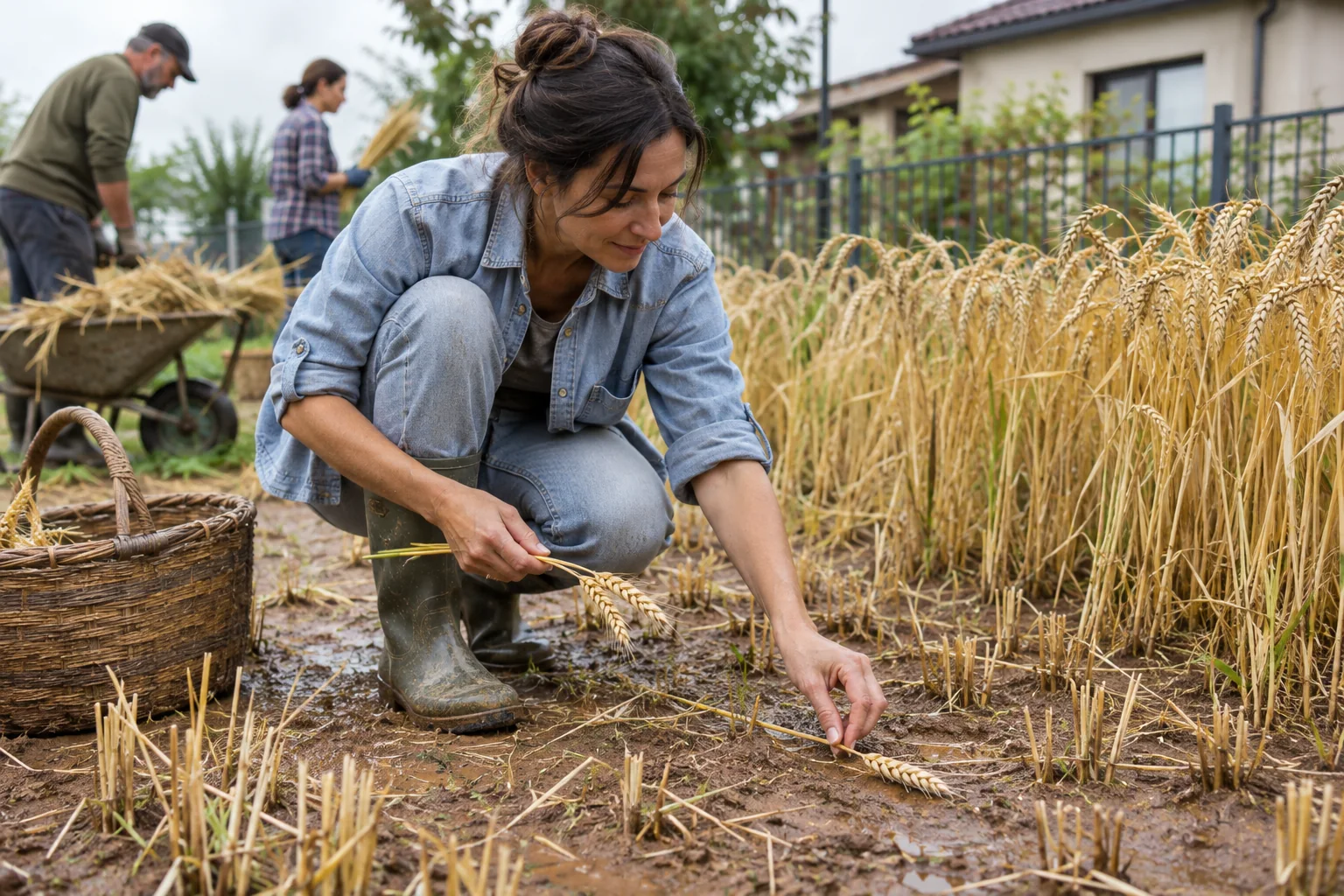
Notice who knows the name of the field
Start with verses 1–3. The narrator introduces Boaz as a relative on Elimelech’s side before Ruth asks Naomi to let her go. Ruth leaves without naming a field or a landholder. Readers already have a name to recognize when the narrator identifies the field she reaches. Ruth eventually learns and reports that name. Keeping those moments apart protects you from reading the opening decision as a plan she made with information she gains later.
At verses 5–7, Boaz asks his overseer about Ruth. The overseer identifies her by where she comes from and by her return with Naomi. Ruth has already spoken for herself at home, so his account adds a viewpoint to words you have heard. Mark where the overseer begins to speak and where he reports what she asked. If a wording about her time in the field is hard to follow, keep the broad sequence in view. The USCCB edition and notes on Ruth 2 flag a difficulty in verse 7 and give references for the practice of gleaning.
Who makes the work safer on Boaz’s field?
8Then Boaz said to Ruth, “Listen, my daughter. Don’t go to glean in another field, and don’t go from here, but stay here close to my maidens.
9Let your eyes be on the field that they reap, and go after them. Haven’t I commanded the young men not to touch you? When you are thirsty, go to the vessels, and drink from that which the young men have drawn.”
10Then she fell on her face and bowed herself to the ground, and said to him, “Why have I found favor in your sight, that you should take knowledge of me, since I am a foreigner?”
Read Ruth 2:8–10 in the World English Bible. Underline where Boaz says to stay, what he orders the young men to do, and where Ruth can get water. In a notebook, write place, people, water in a column. Add one observation by each. For people, write that the person with authority over the men addresses their conduct. For water, write that Ruth may drink from what the workers have drawn.
Then read Ruth’s question separately. She identifies herself as a foreigner and asks why she has been noticed. Her question gives you a reason to keep the safety instructions in your reading. An ear of grain is useful only if a person can reach it and stay long enough to gather more. As a check, explain to a partner how one of Boaz’s instructions changes the conditions of the work. If your answer could describe any generous act, add a detail from verse 8 or 9. Your note now tells someone where to look and what the responsible person actually did.
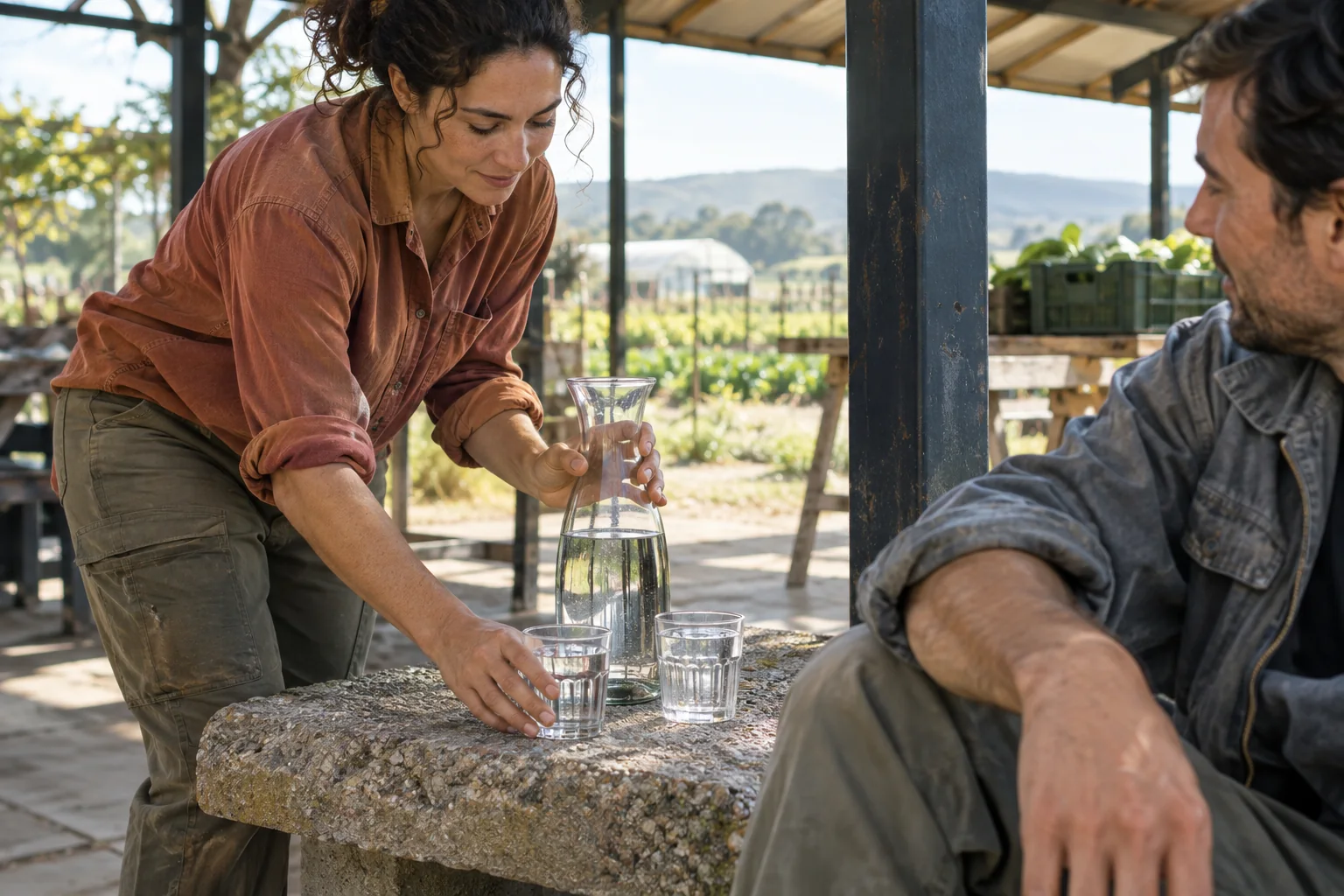
Look at the meal and the second instruction
Read verses 14–16 and watch who is present at the meal. Boaz invites Ruth to eat. She sits beside the reapers, eats until she has enough and has food left. Later, when Ruth gets up to glean again, Boaz gives instructions to the workers. They are to let her gather even among the sheaves and to draw out some stalks for her. He also tells them how to treat her while she works.
Make two lines in your notes. On the first, put what generally stays behind after harvesting. On the second, put what Boaz deliberately asks his workers to leave. This is a better way to read the scene than jumping from Ruth’s request directly to her day’s total. The text makes room for both ordinary work and a specific change in how the people running the field work. It also keeps the roasted grain she eats at the meal separate from the barley she gathers. Remember that distinction when the story moves back to Naomi.
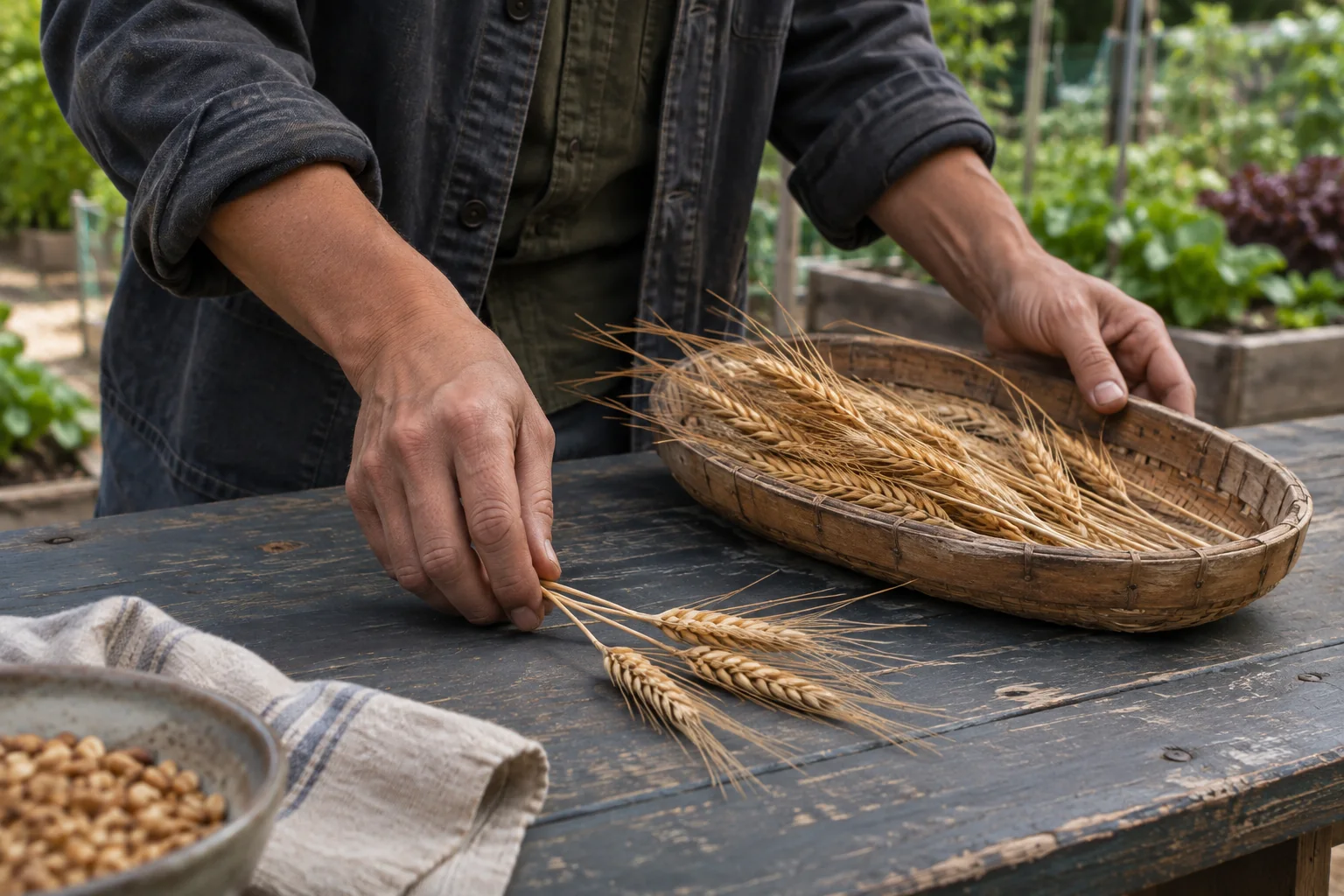
Follow what Ruth brings home
17So she gleaned in the field until evening; and she beat out that which she had gleaned, and it was about an ephah of barley.
18She took it up, and went into the city. Then her mother-in-law saw what she had gleaned; and she brought out and gave to her that which she had left after she had enough.
19Her mother-in-law said to her, “Where have you gleaned today? Where have you worked? Blessed be he who noticed you.” She told her mother-in-law with whom she had worked, “The man’s name with whom I worked today is Boaz.”
20Naomi said to her daughter-in-law, “May he be blessed by the LORD, who has not abandoned his kindness to the living and to the dead.” Naomi said to her, “The man is a close relative to us, one of our near kinsmen.”
Read Ruth 2:17–20 in the World English Bible. Draw two arrows from the field to town. Label the first barley. Ruth gleans until evening, beats out what she has gathered and takes it back. Label the other food from the meal. Ruth gives Naomi what she had left after she ate. Both belong in the story of that day. If your notes contain only a total for the harvest, you will miss the second arrow.
Read verse 19 aloud and listen to the order of Naomi’s questions. She sees the result and asks about the place and the work. Ruth identifies Boaz. Naomi then names a family connection that has already been mentioned to readers near the start. Write a third arrow, for the news that travels with Ruth. The story has moved from a place Ruth finds to a household that can now name the person who made it possible to return. Naomi’s words about that relationship will matter again in the next chapter. For today’s reading, note the question they create and finish this chapter first.
Leave the open questions with the text
Several details in the passage invite conclusions that need more room. The story gives a quantity for the barley, about an ephah. You can observe that Ruth has an amount worth reporting and that Naomi notices it. Converting an ancient measure to a modern shopping bag risks false precision. The account also introduces a family connection without telling you in chapter 2 every step of what that connection will mean later. Write down what you would need to check before using a modern legal term for it.
The blessing in verse 20 is another place to slow down. Your edition may make one reading of its grammar easier to hear than another. You can identify Naomi as the speaker and recognize the recently named kindness, then study the wording of the blessing if that is the question you brought. Keep an observation about who spoke distinct from a claim that the entire story offers the same outcome to anyone in need. That distinction leaves room for the trust and uncertainty that the characters face while the harvest continues.
Read the last three verses before turning the page
Verses 21–23 give you another conversation at home and a brief view of a longer stretch of time. Ruth reports the invitation to stay until the harvest ends. Naomi brings the question of safety into her response. The narrative then takes you through both barley and wheat harvests and mentions that Ruth is with her mother-in-law. The chapter started with a question about where she might go for a day. It ends with enough continuity to describe a season.
Try reading just the first and last paragraphs side by side. Write what Ruth can say about tomorrow at the end that she could not say at the beginning. Base your answer on the place she is to stay, the people beside her and the time given. If you are reading with someone else, each of you can choose one of those details and point to its verse. This makes the ending specific enough to return to later, when the book asks you to think about how her situation will change again.
A final check for a reading you can explain
Close the chapter and tell the story in four small steps. Ruth asks to go. She works in a field where people have received instructions about her access and safety. She goes home with grain and food. Naomi hears the name of the landholder and says they have a family connection. Open the chapter again and put a verse beside each step. If you describe something that you remember from chapter 3 or 4, write that observation separately with its own reference.
For a conversation about care today, choose one action from the chapter that changed what somebody could actually do. Say what you saw in the narrative first. Then name a question worth asking in your own setting, such as who can change the conditions of work or who gets to say whether help is usable. Let the people involved describe what they need. You can return to the book of Ruth overview to see how the field scene fits between the arrival in Bethlehem and the decisions still to come.
Questions about gleaning in Ruth
What did Ruth glean in chapter 2?
She gathered barley during the day the chapter describes in detail. Its last verse says she continued through the barley and wheat harvests.
Who first suggests going to the field?
Ruth asks Naomi in verse 2. Naomi agrees. The narrator identifies the field Ruth reaches in verse 3.
Does Boaz simply give Ruth the grain?
He arranges access and directs his workers to leave extra grain. Verse 17 still shows Ruth gleaning until evening and beating out what she gathered.
Why does the story mention the leftover meal?
Ruth brings it to Naomi along with the grain she worked for. Verses 14 and 18 connect eating at the field with sharing food at home.