Keep Bible study questions close to the passage
What should you do with a question that remains after you close the Bible? Keep Bible study questions with the verse that raised them, one observation you can check, and a small next step. On the next reading, open the passage before consulting your earlier answer. You may see a detail you missed, change the question or decide that it still needs more work. A notebook gives you a way to carry the question between those readings.
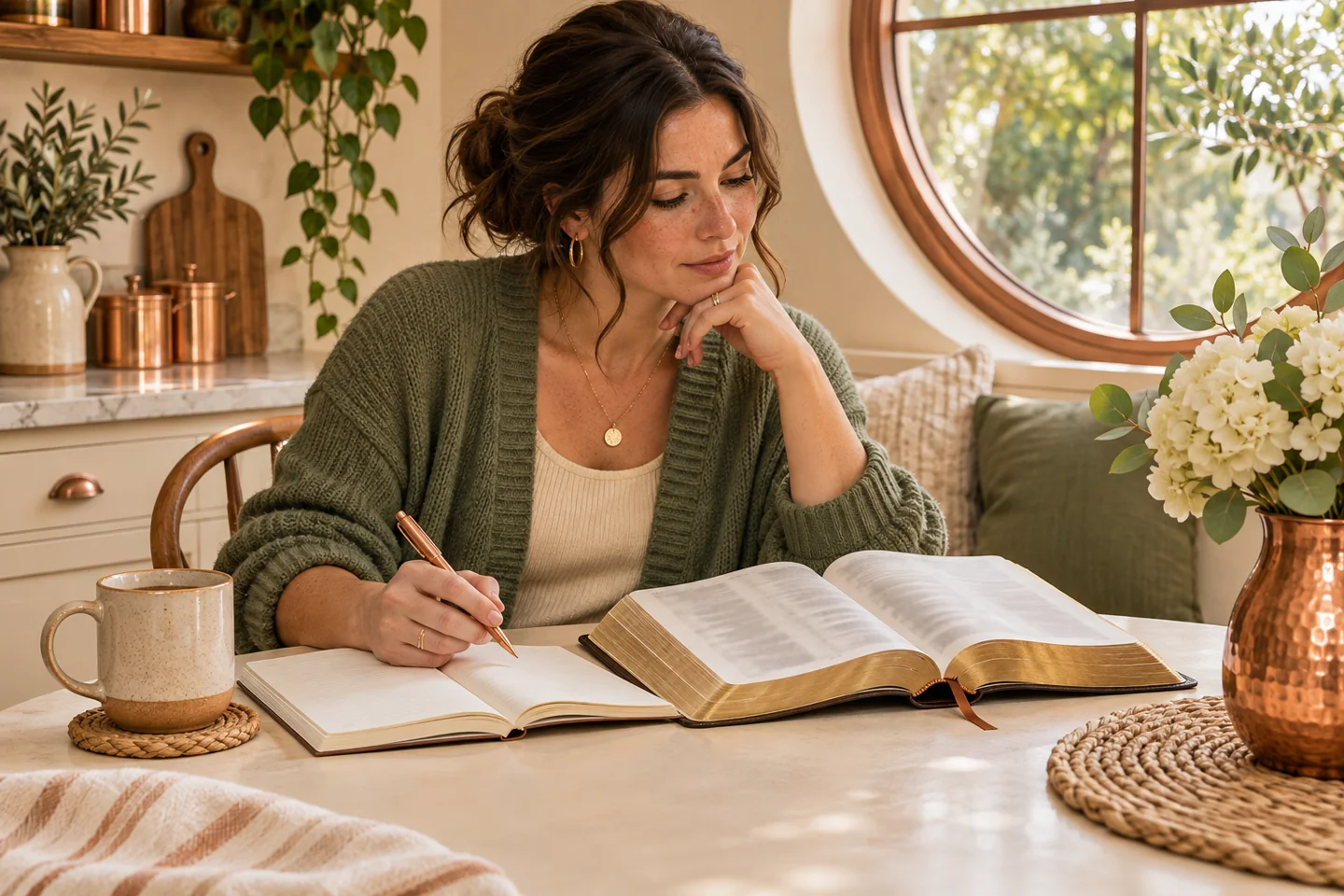
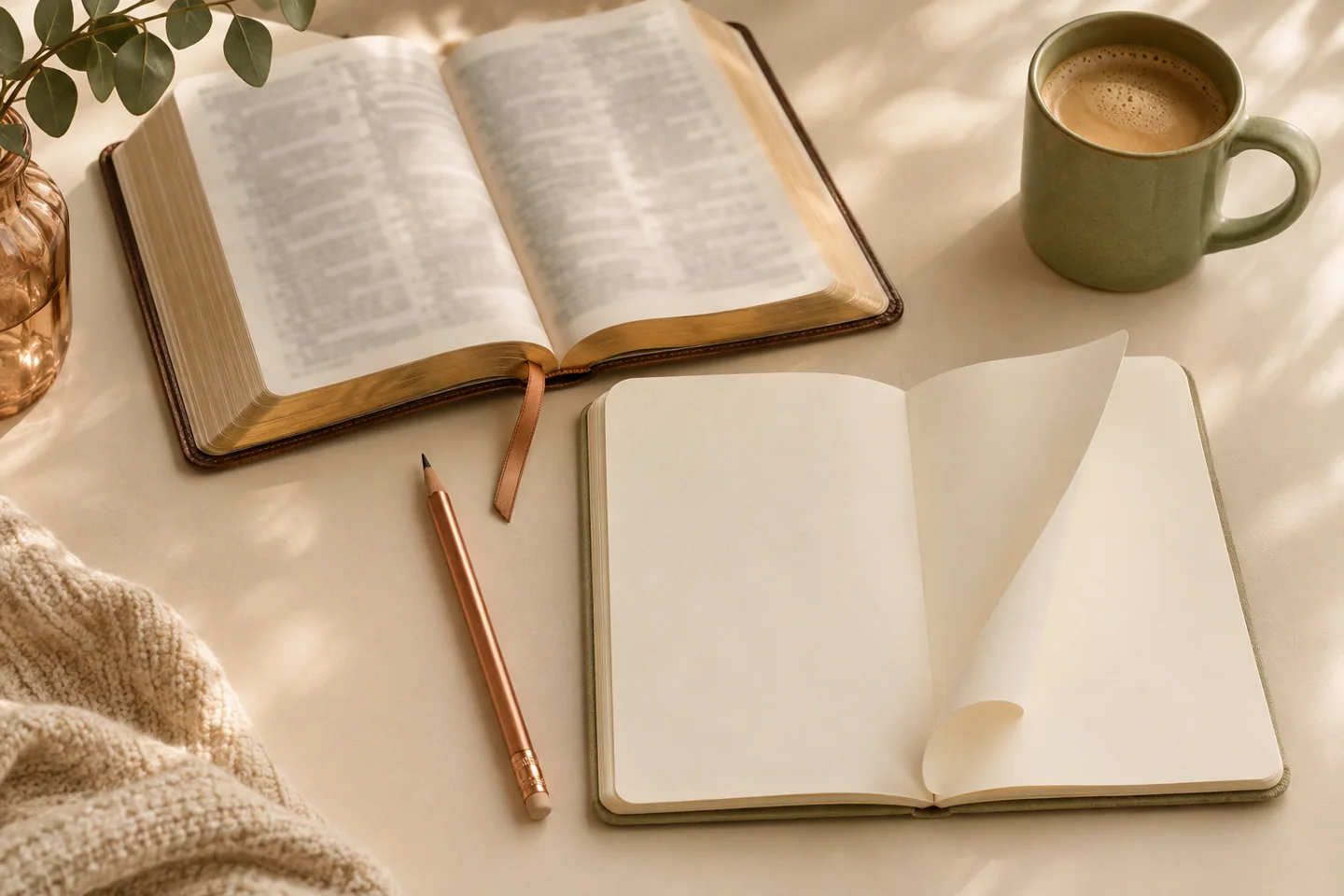
Start with one question rather than trying to account for every difficult point in a chapter. Write the date, book, chapter, verses and edition. Copy only the short wording that prompted the question, then put your question below it in your own words. Leave room for a later note. This is enough to begin whether you are using paper or a reading journal on your phone. You can continue reading after making the note, knowing where to return.
Turn a large uncertainty into a question you can inspect
“I don't understand this passage” may describe your experience accurately, but it gives your next reading little direction. Try naming the point where you lost the thread. Are you unsure who is speaking, what a pronoun refers to, why a character acts, or how a sentence connects to the previous one? Give that uncertainty a reference. The next action might be as small as reading back three verses to find who entered the scene.
Keep the larger concern if it matters to you. A question about an action in a story may also raise a personal or theological concern. Put those on separate lines so you can see which one a particular observation addresses. If the next paragraph identifies the speaker, you have learned something definite even if your larger concern remains. You can bring both lines to a conversation with another reader and explain how they are related.
The guide to reading a verse in context helps you choose the lines to reread.
Record the evidence before a possible explanation
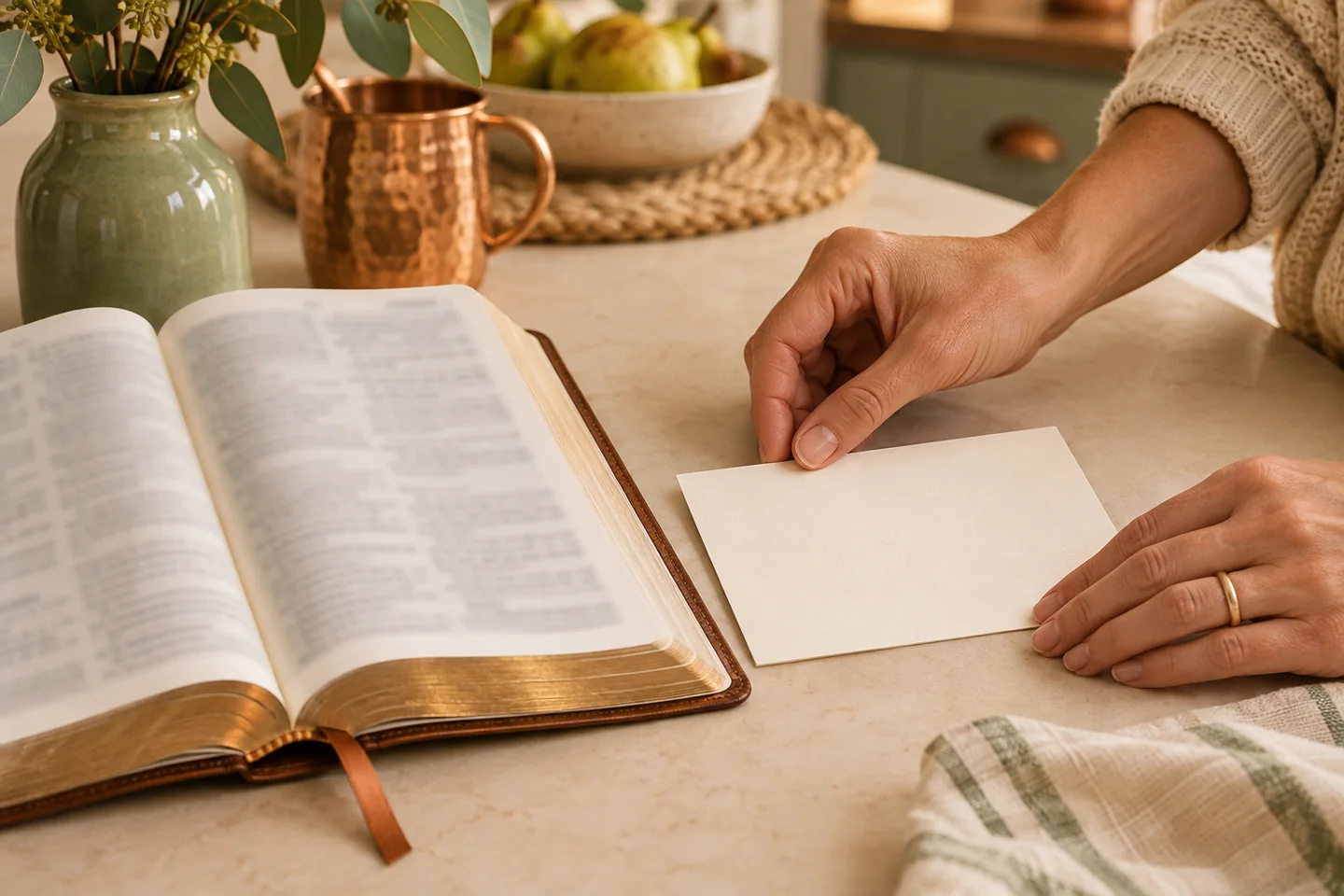
Write one thing the passage explicitly gives you. A speaker asks a question. A sentence names a reason. A scene ends before someone replies. These are observations you can show another reader. Then write a possible explanation underneath and use wording that reflects your confidence. “This may refer to the previous sentence” leaves you room to compare other possibilities. Add the verse you would need to reread to test that explanation.
When reading a commentary, keep the source beside the explanation you record. Check whether it explains the detail you were asking about or answers a different question. You can learn from an account of the larger scene while still needing help with one expression. Before adding the explanation to your notes, say in your own words what evidence supports it. If that evidence comes from another passage, write the additional reference rather than relying on memory.
For another way to frame a reading question, see the American Bible Society passage study guide.

A worked question at the end of Mark 4
38He himself was in the stern, asleep on the cushion; and they woke him up and asked him, “Teacher, don’t you care that we are dying?”
39He awoke and rebuked the wind, and said to the sea, “Peace! Be still!” The wind ceased and there was a great calm.
40He said to them, “Why are you so afraid? How is it that you have no faith?”
41They were greatly afraid and said to one another, “Who then is this, that even the wind and the sea obey him?”
Ask about the change in fear. Read Mark 4:38–41 in the World English Bible. Note the disciples' question before Jesus stills the storm, his question afterward and their question at the end. You might ask why the scene still describes fear after the wind has ceased. Keep the observation that the danger and the final question occupy different places in the story. For your next reading, compare what the disciples fear before the calm with what they ask about Jesus afterward.
The note can stop there today. You do not need to invent an unspoken reply from a disciple to make the scene feel complete. Read the ending once more and keep its final question in view. On a later visit, you can look at the scenes around it and see what they add to the disciples' understanding. Add a dated follow-up rather than erasing the first question, so you can trace what you noticed at each reading.
A worked question in Luke 10
25Behold, a certain lawyer stood up and tested him, saying, “Teacher, what shall I do to inherit eternal life?”
26He said to him, “What is written in the law? How do you read it?”
27He answered, “You shall love the Lord your God with all your heart, with all your soul, with all your strength, and with all your mind; and your neighbor as yourself.”
28He said to him, “You have answered correctly. Do this, and you will live.”
29But he, desiring to justify himself, asked Jesus, “Who is my neighbor?”
Follow the question that introduces the story. Read Luke 10:25–29 and continue through the account that follows. Notice how the lawyer's first question differs from the one in verse 29. Write both references, then ask what the second question contributes to the exchange. Before recording an answer, read the question Jesus puts at the end of the story. Your next step can be to compare those two questions, identifying who asks each and how its wording directs attention.
A note about the exchange might initially focus on the word “neighbor.” On another reading, you may notice the difference between identifying a category of people and considering the conduct of the person who showed mercy. Keep the verses beside that observation so a reading partner can follow it. If you want to explore the social setting of the story, record that as another question with its own source needs. The wording in front of you gives you a first step before that research.
Give the next reading a manageable task
Choose an action that you could actually finish during your next sitting. Read the preceding paragraph. Compare the two questions. Identify who is being addressed. Check how the same edition phrases a nearby occurrence of a word. “Research everything about this chapter” gives you no clear point at which to return to the original question. A smaller task makes it easier to recognize what you learned and decide what still needs work.
Write down where you intend to begin. If you are reading on your phone, keep the reference in the note itself so you can locate it even if your place in the reader changes. In Psalia, our Bible reading app, the journal gives you space to keep your own written observations and revisit a passage. You supply the question and evaluate the evidence. A paper notebook can carry the same short record, with a page marker to help you find it again.
Use the chapter study guide when the question needs a wider reading.
Reopen the passage before rereading your conclusion
On your next visit, read the passage once without looking at the explanation you wrote earlier. Note a detail that stands out now. Then compare it with your earlier note. Does the new observation support your explanation, challenge it or concern something else? If the two notes address different points, give each a clear reference. This avoids treating every new detail as a correction when you have simply noticed another feature of the scene.
Date the follow-up and say what prompted it. “I read the previous paragraph and found the speaker named” is easier to evaluate later than “I understand it now.” You can preserve the original wording and add the new observation below it. If you do revise the question itself, explain the change briefly. Perhaps the issue was never who was speaking but which group the speaker was addressing. That is progress you can describe without claiming the whole passage is settled.
Bring a precise question to another reader
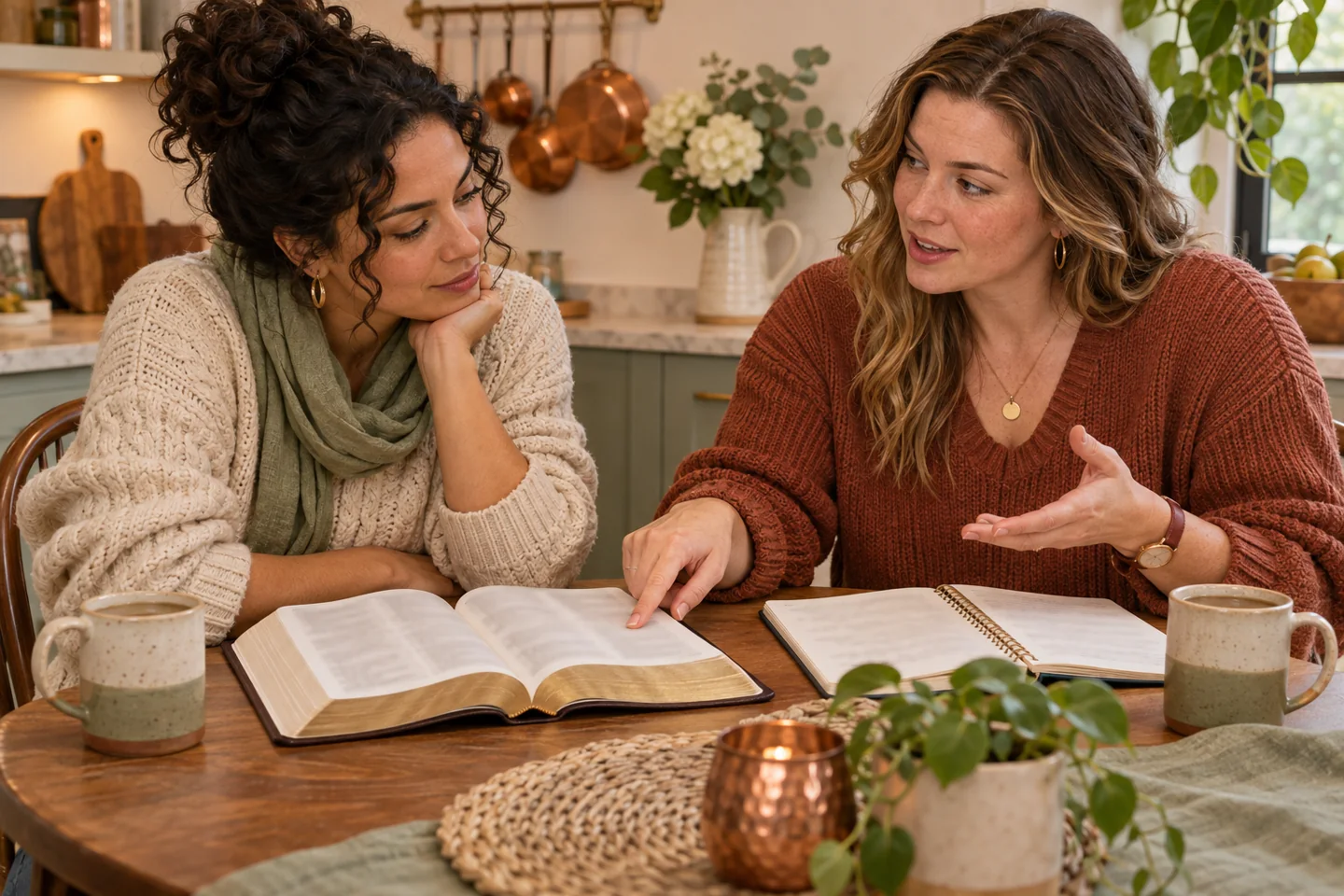
Choose the passage and the question before starting the conversation. Read the relevant lines together, identifying the edition if you use different Bibles. Show the observation that raised your question and ask how the other reader accounts for it. Listen for the evidence behind their explanation. When a response refers to another passage or a historical detail, note that reference or source so you can look at it afterward.
If the conversation becomes too broad, return to the sentence you began with. You can ask what the proposed explanation changes about the way you would read that sentence. It may turn out that you agree about the observation and differ about its implications. Record that distinction in ordinary language. If the question involves a difficult personal experience, choose a setting and a person with whom you can speak freely. A reading discussion can leave room for more than one kind of concern.
Leave an honest status for the next visit
At the bottom of the note, write where things stand. You may have found an answer to a reference question, a plausible explanation that still needs checking, or a question that remains open. Include the reason for that status. One explanation may fit the paragraph better because it accounts for a repeated phrase. Another may depend on a historical claim you have not yet verified. Keeping those reasons beside the status makes the note worth returning to.
Avoid turning a personal guess into a quotation from the Bible when you share the note. If you copy a verse, check it against the edition and keep your explanation below it. If you repeat someone else's interpretation, name the source. A question log works best when the next reader can see what was read, what was inferred and what is still being asked. That next reader may simply be you a few weeks later.
Finish with a short check
Before leaving the note, see whether you can find the passage from the reference alone. Check that the question names a particular detail and that the observation can be shown in the text. Read the next action and decide whether it is small enough for another sitting. If the action requires a source, name the kind of information you need instead of filling in a likely answer.
You can keep reading other passages while one question remains in the notebook. When you return, begin with the original reference and look again at the evidence. If you decide to set the question aside for a while, write that choice with the date. Your record will still tell you where the question came from and what you have already checked. That makes a future return easier, whether the eventual answer is brief or requires several conversations.
Questions about keeping reading questions
How many questions should I keep?
Begin with one precise question and its reference. Add others when they concern different details.
What if my explanation changes?
Keep the first note and add a dated revision with the evidence that changed your reading.
Should I finish the question before reading on?
You can record the next step and return later while continuing your reading.
Can I share my note?
Check quotations against the edition, identify sources and label your own interpretation.