

Find the meaning of Psalm 130 in its four movements
The opening of Psalm 130 is a call to be heard from the depths. It makes sense as a line of prayer on its own, but the meaning of Psalm 130 becomes clearer when you read all eight verses. The person who speaks at the beginning asks a question about wrongdoing, names forgiveness, and speaks about waiting. Near the end, that person turns outward and calls on Israel to hope. You can hear the shift even before you have settled what each image means.
On a first reading, place a mark after verses 2, 4 and 6. Read each pair as a small unit. Ask what the speaker is doing and who is being addressed. When you reach the last pair, go back to the beginning and notice which words have changed. The four groups are a practical way of following the thought. Your edition may put a heading or paragraph break somewhere else. Use the verse numbers so you can share your observations with someone reading a differently formatted Bible.
Read the cry and the request for a hearing
In verses 1 and 2, a voice comes from the depths and asks the Lord to hear. The opening gives you a place to imagine. The following verse gives you an action you can point to. Read the two together and ask what the speaker is requesting at that moment. A hearing is at the center of those lines. The rest of the psalm tells you why that hearing matters to the speaker.
Make a note of what you learn about the trouble and what remains unnamed. The psalm does not supply the speaker’s name or a detailed account of how the trouble began. If you are reading with others, you can agree on the fact of distress before discussing how the image speaks to you. That leaves room for someone whose circumstances differ from yours to read the same words. The overview of the Psalms can help you place this short prayer in a book that gives voice to petitions as well as praise.

Work through the question in verses 3 and 4
3If you, LORD, kept a record of sins, Lord, who could stand?
4But there is forgiveness with you, therefore you are feared.
Read Psalm 130:3–4 in the World English Bible. First name the condition in verse 3. The speaker asks what would happen if sins were kept on record. Next mark the question about standing. It concerns what anyone could do under that condition. Finally underline what the next verse says is with the Lord. The movement runs from the possibility of being held to account to the presence of forgiveness.
In a notebook, use one line for each verse. On the first line, write what the question assumes. On the second, write what gives the speaker room to keep addressing the Lord. Say the two lines in order and see whether your second line actually answers the first. If it could describe any hopeful sentence, add the word forgiveness and the person to whom it is attributed. The verse also associates forgiveness with reverence. Read that last part aloud and leave room for a question about how mercy and reverence belong together in this prayer.

Keep the question separate from a verdict about the speaker
A reader may want to explain immediately why the speaker is in trouble. The text gives a question about sin and then a statement about forgiveness. It leaves the details of what led to this particular prayer open. A careful note can hold all three observations at once. That matters if you read the passage with someone who has come to it in grief or uncertainty. You can talk about the movement of the prayer without assigning a cause to the other person’s distress.
The USCCB’s Psalm 130 and its notes identify the text as a lament and describe its use as a penitential psalm in Catholic prayer. That context can explain why some readers know the title De profundis. In your reading, begin with what the two verses actually say before bringing in a tradition or a remembered setting. Write the difference between the question in verse 3 and the assertion in verse 4 in your own words. Both belong to the same prayer.
Follow the watch for morning in verses 5 and 6
5I wait for the LORD. My soul waits. I hope in his word.
6My soul longs for the Lord more than watchmen long for the morning, more than watchmen for the morning.
Read Psalm 130:5–6 in the World English Bible. Make two columns. In the first, write who the speaker is waiting for and what the speaker hopes in. In the second, name who is watching for morning. Read the repeated wording in verse 6 at an unhurried pace. The comparison gives you someone whose attention is directed toward something beyond the present darkness.
Then read verse 5 again. The person praying names the Lord and the Lord’s word. The watchers’ morning helps you hear the force of that longing. It supplies an image for waiting. If you are reading out loud, let the repeated phrase take a breath before the next verse. In your notes, try one complete sentence about the comparison. It can name the people who watch, what they watch for and why the image belongs here. Check that your paraphrase leaves the speaker waiting when the lines end. The psalm has moved away from the immediate cry, and still has something more to say.

Listen for the change of address at the end
In verse 7, the voice calls on Israel. Up to this point, you have heard the speaker describing a cry, a question and a wait. Now the same psalm has words for other people to hear. Look for the word or phrase that gives a reason for the invitation to hope. Then read verse 8 and ask whom the final line names and what the line says Israel will be redeemed from. This keeps the public appeal connected to the question that appeared earlier in the prayer.
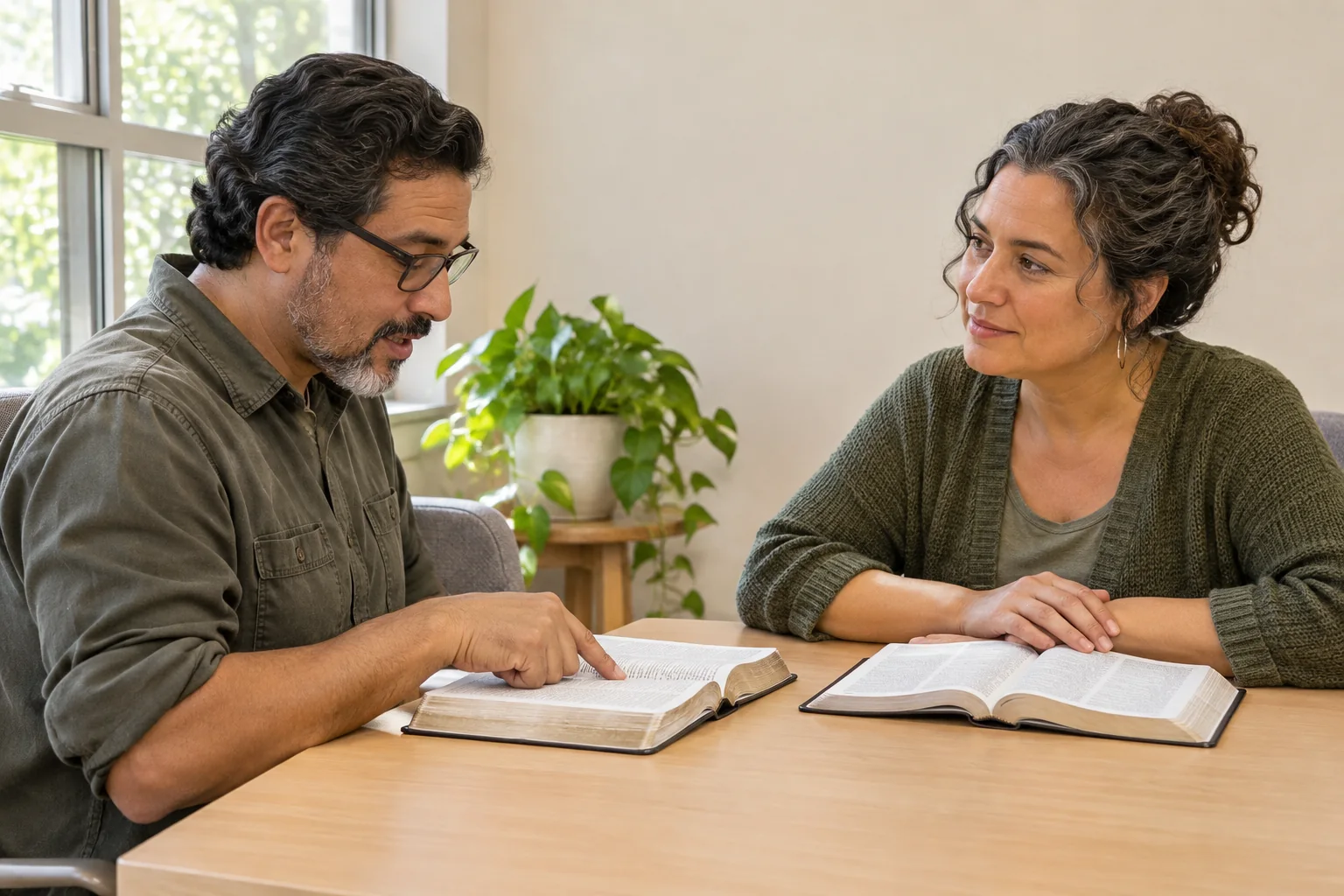
Try reading the two halves of the psalm with two adult readers. One can read through verse 6 and the other can speak verses 7 and 8. Listen for the name Israel as a cue. You can then read the whole prayer with one voice to hear how naturally the parts flow together. Take note of the difference between an observation about whom the verse addresses and an application you might make to your own community. The first has a verse you can point to. The second is a question to discuss together.
Notice how an edition arranges the repeated line
Some editions fit both parts of the watchmen comparison into verse 6. Others place a line break between the repetition and the appeal to Israel. If you are reading with several editions at the table, ask everyone to locate the watchmen image and the first address to Israel. You will have two places in common even if the layout differs. Then compare what happens when you pause at each break. A pause can make the repeated longing more audible or make the turn toward Israel feel closer.
The opening words can help with numbering too. In some liturgical books this prayer appears as Psalm 129. Check for the opening cry from the depths and the turn to Israel at the close. Use the number printed in the edition you are discussing and write down the opening words if you exchange references later. The numbered order, the page layout and the movement of the prayer are separate things you can each check.
Choose one line for a short journal entry
Choose the movement of the prayer that you want to read again. Record the verse and one sentence about what you observe. For example, an entry about verse 7 could mention that Israel is now being addressed. If the shift prompts a question about hope spoken in a group, write the question below the observation, with space for someone else’s reading. Keep the part you can verify clearly marked as such.
A short journal entry can also include a prayer in your own words. It can begin by saying what you would like to be heard about, or by naming what you are waiting for. Keep it distinct from the psalm’s words and leave it unfinished if you have more to think about. If you begin with the most familiar line, read the lines around it to see whether your response fits the passage you actually chose. The guide to reading a Bible verse in context offers a way to do that.
Set a small limit for that entry. Keep the verse number and the two sentences you actually want to reread. When you return the next day, read that pair of verses first. You can then decide whether your original observation still stands or whether its neighboring lines make you notice something else. Leave the earlier date beside the old note so you can see what changed.
Check that you can tell where the prayer turns
Close the text briefly and tell the prayer in four short sentences. Name the cry, the question about sins and its answer, the wait and the appeal to Israel. Open the page again and put one verse number beside each sentence. If your summary leaps straight from the darkness to the final redemption, return to verses 5 and 6 and give the waiting its own sentence.
Now decide what you want to read again. You might notice the prayer’s opening address, the ground for reverence or the reason given for hoping. Point to the verse and name what it adds to the words before it. For a group reading, ask each person to choose a different turn and compare what you heard. A good stopping point is when you can show another reader where the prayer changes address and what makes its closing invitation possible.
Questions about Psalm 130
Why are there watchmen in Psalm 130?
They give the longing of the speaker a concrete comparison. The speaker is waiting for the Lord and puts hope in the Lord’s word.
Does the morning mean the trouble has ended?
The passage describes watchmen longing for morning and a speaker who waits. The comparison supports the closing invitation to hope.
Is Psalm 129 the same prayer?
In some liturgical numbering, Psalm 129 is the text known as Psalm 130 in the World English Bible. Check for the opening cry from the depths.
Who is called to hope at the end?
Verse 7 addresses Israel. Verses 7 and 8 give reasons for that call and describe redemption from sins.