

Where metaphors in the Bible begin
You read that Jesus is a vine, or that a person is like a tree. The picture is familiar, but the next step may be less obvious. Should every part of the plant represent something? Does calling a statement figurative make it less serious? Reading metaphors in the Bible well begins with a more focused question: what relationship does this particular passage develop through this particular image?
We will use two examples: the vine and branches in John 15:1–8, and the tree comparison in Psalm 1:1–3. The first presents an extended metaphor; the second explicitly compares a person to a tree. You can complete the exercise with the quoted passages, a notebook and a few minutes to reread. The aim is a short explanation that another reader could check against the text, including a clear limit on what you have not established. You do not need a secret-symbol dictionary to begin.
Identify the image and what it describes
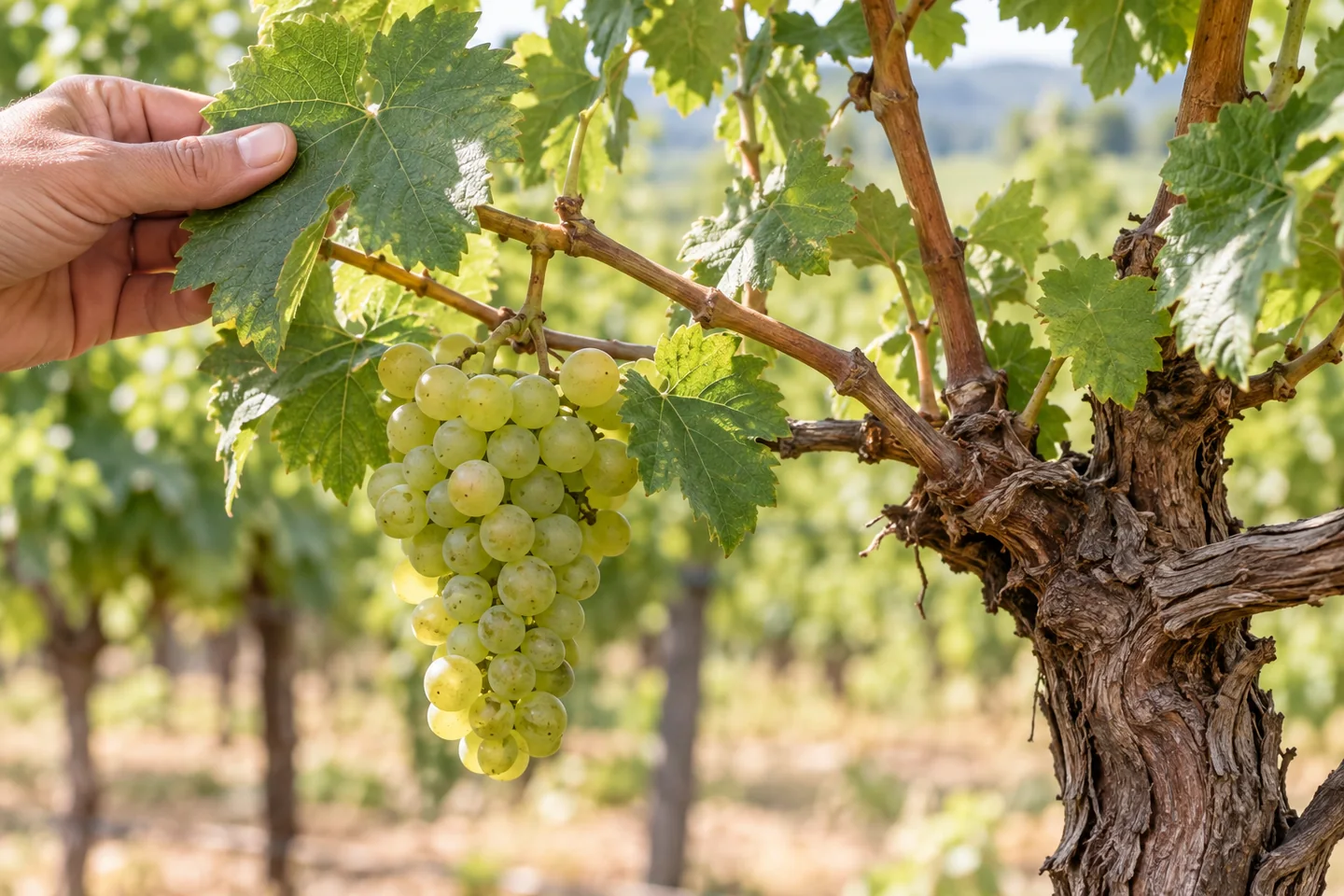
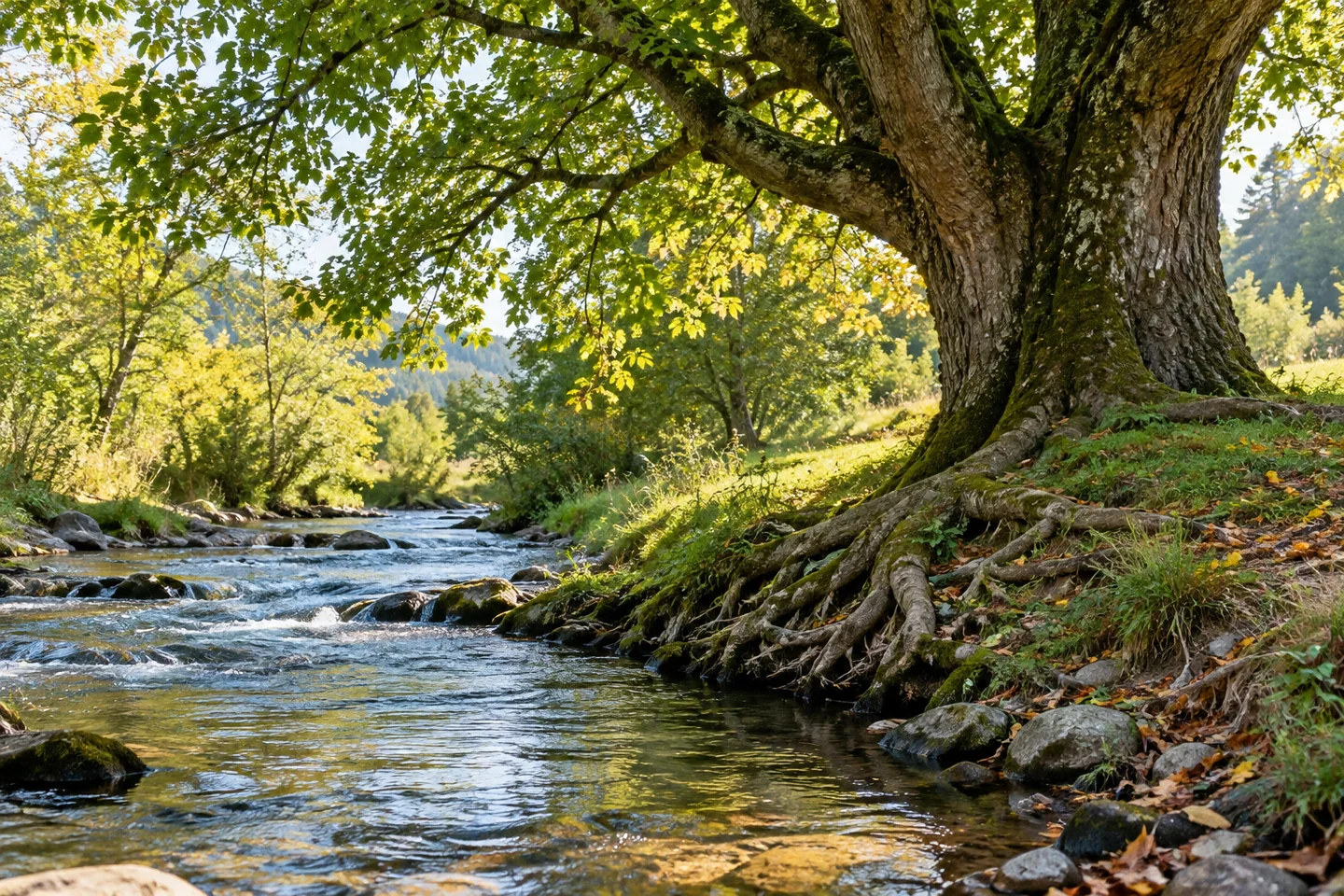
Start by naming the ordinary image without interpreting it yet. In a vineyard, branches grow from a vine and bear fruit. In the psalm’s image, a planted tree has access to water and produces fruit in its season. You need enough understanding to follow those relationships, not an exhaustive account of ancient agriculture. A modern photograph can make the objects recognizable, but it cannot establish the exact appearance of an ancient setting.
Then identify what the passage says the image describes. John 15 names Jesus as the vine, the Father as the farmer and the disciples as branches. These assignments come from the speech itself. Psalm 1 uses a comparison for the person described in its opening verses. Record the textual connection before adding an application. If you cannot point to the sentence making the connection, leave your proposed meaning as a question rather than presenting it as an established correspondence.
Explain the relationship, not a list of symbols
A useful explanation usually needs a verb. Branches remain in the vine and bear fruit; a tree draws on its setting and bears fruit in season. Ask what those actions contribute to the surrounding teaching. Simply writing “vine means Jesus” gives you an identification but does not yet explain the movement of the passage. Add what the relationship allows the speaker to say about dependence, remaining or fruitfulness.
Avoid supplying a separate code for everything visible in the photograph. The color of the grapes, the number of leaves and the position of a modern support wire do not acquire biblical meanings because they appear near a vine. Even a detail present in the passage needs to be read through the role it plays there. Your explanation should become clearer when you return to the sentences. If it depends mainly on a detail you introduced yourself, shorten it until the textual connection is visible again.
Read the image inside its paragraph
Read before and after the sentence that caught your attention. John 15:1–8 repeatedly connects remaining and bearing fruit; the following verses continue with love and the command to love one another. Those surroundings help you avoid turning fruitfulness into an unspecified measure of personal productivity. For the larger reading journey, our guide to reading the Gospel of John places individual speeches among the book’s encounters and recurring language.
The SIL Translator’s Notes on John 15:1, hosted by TIPs identifies the extended vine metaphor and the participants it compares. This is specialist translation guidance, not a replacement for reading the passage. Use it to check your understanding of the image’s basic structure. Keep your own theological conclusions distinguishable from the textual assignments and from the source’s interpretive guidance, especially when a difficult detail remains disputed.
Worked example: the vine in John 15
1“I am the true vine, and my Father is the farmer.
2Every branch in me that doesn’t bear fruit, he takes away. Every branch that bears fruit, he prunes, that it may bear more fruit.
3You are already pruned clean because of the word which I have spoken to you.
4Remain in me, and I in you. As the branch can’t bear fruit by itself unless it remains in the vine, so neither can you, unless you remain in me.
5I am the vine. You are the branches. He who remains in me and I in him bears much fruit, for apart from me you can do nothing.
6If a man doesn’t remain in me, he is thrown out as a branch and is withered; and they gather them, throw them into the fire, and they are burned.
7If you remain in me, and my words remain in you, you will ask whatever you desire, and it will be done for you.
8“In this my Father is glorified, that you bear much fruit; and so you will be my disciples.
Read the quoted John 15:1–8 as a complete unit. Notice who speaks, who is addressed and which relationships are named. The branches cannot bear fruit by themselves; remaining is repeated. Pruning, removal and fire also belong to the speech. Reading figuratively does not mean deleting its difficult warnings, but neither does it authorize you to identify a particular person’s illness or disappointment as divine pruning.
Worked reading note: “John 15:1–8, WEB. Image: vine, farmer and branches. Stated assignments: Jesus, the Father and the disciples. Main relationship: the branch depends on remaining in the vine to bear fruit. The following teaching about love helps me ask what fruitfulness involves. Limit: I have not established that a particular hardship is a pruning event or that a visible success proves spiritual standing.”
This note is original explanation, separate from Scripture. It retains a warning without turning it into a diagnosis. For personal response, you might ask how the surrounding call to love challenges one specific action today.
Worked example: the tree in Psalm 1
1Blessed is the man who doesn’t walk in the counsel of the wicked, nor stand on the path of sinners, nor sit in the seat of scoffers;
2but his delight is in the LORD’s law. On his law he meditates day and night.
3He will be like a tree planted by the streams of water, that produces its fruit in its season, whose leaf also does not wither. Whatever he does shall prosper.
Psalm 1:3 explicitly says that the person is like a tree. Read the opening verses before explaining the image, and continue through the psalm’s contrast with chaff and its ending. The comparison follows the description of counsel, delight and meditation. Its fruit appears in season; you should not replace that phrase with a demand for immediate visible results in every part of life.
Worked reading note: “Psalm 1:1–3, WEB. Image: a planted tree by streams, with seasonal fruit and enduring foliage. It describes the person characterized in verses 1–2. The comparison gives a picture of rooted, sustained life within the psalm’s two-way contrast. Limit: the tree is not a timetable for income, health or measurable achievement. I need the rest of the poem before stating its overall contrast.”
Our whole-psalm guide to Psalm 1 develops that broader reading. Here the narrower task is to explain how the image contributes without treating its every feature as a separate promise.
Notice where a comparison stops
A metaphor brings two things into a relationship; it does not make them identical in every respect. Jesus is not being described as a literal woody plant. A human reader does not become a tree. The force of these passages lies in a developed connection, so neither a literal botanical reading nor an unrestricted symbolic expansion explains them adequately. Ask what the text selects for attention and what it leaves unused.
This also matters when two passages share an image. Fruit in John 15 and fruit in Psalm 1 invite comparison, but the shared noun does not erase differences of speaker, genre and context. Explain each passage independently before putting the notes beside each other. Do not transfer every detail from one into the other. A connection becomes useful when it clarifies the distinct contribution of each passage, rather than producing a new combined image that neither passage actually gives you.

Write an explanation you can revise
Use four short headings: image, stated connection, contribution and limit. Under image, describe what is pictured. Under connection, cite the words that identify its participants. Under contribution, write one or two sentences about the relationship emphasized. Under limit, name one tempting conclusion that the passage has not established. Include the reference and translation so you can return without trying to reconstruct your reasoning from memory.
Read your contribution aloud without technical terms. If you can only repeat that the image is “deep” or “powerful,” ask which action or contrast makes it meaningful. If your explanation sounds like a universal promise of success, compare it with the whole paragraph again. A revised note is often more precise because it claims less. Preserve a genuine remaining question instead of inserting a confident answer merely to make the page look complete. The question gives your next reading a specific purpose.
Use further reading for the actual difficulty
Sometimes the difficulty is a word, such as the relation between pruning and cleansing in John’s speech. Sometimes it is the wider literary setting or a theological question about the warning. Name the difficulty before opening a commentary. Look for a source that addresses that question and explains its reasoning. Record an attributed interpretation rather than merging the source’s conclusion into the Bible quotation as though the wording itself contained the explanation.
Christian traditions may explain some implications differently. You can acknowledge that difference while retaining the clear textual connections you have observed. Avoid claiming that an unfamiliar agricultural practice is the definitive key unless a reliable source establishes it and the passage supports its relevance. Nor should an illustrative photograph become historical evidence. In this exercise the photographs help you notice physical relationships; the explanation must still be tested against the passage’s words and setting.
Check the image before applying it
Before closing the note, point to the phrase that establishes each connection you have written. Check whether you have distinguished the metaphor in John from the explicit comparison in the psalm. Ask whether the surrounding sentences shaped your explanation, whether a difficult warning disappeared, and whether an appealing detail came from the text or from your imagination. Remove any correspondence you cannot support, or label it as an unanswered question.
Then write a modest personal response in a separate sentence. You might reread the following teaching about love, reconsider whose counsel shapes a decision, or bring a question to a study group. None of those responses becomes an additional Bible command simply because you wrote it beneath a verse. Keep the reference, your explanation and its limit together. A useful reading ends with an image made more intelligible and an application that remains open to correction when you return to the whole passage.
Questions about biblical images
Are metaphor and comparison the same thing?
Both relate an image to something else. A comparison makes the likeness explicit, as Psalm 1 does with the tree; John’s vine speech directly identifies the participants through an extended metaphor.
Does figurative mean unimportant or untrue?
No. Figurative language can make a serious claim through a relationship or image. The task is to understand how the language works rather than dismiss it or force it into a literal description.
Should every detail have a spiritual meaning?
Start with the details the passage develops. Do not assign a code to leaves, colors or other features merely because they exist in the physical scene.
Can two passages use the same image differently?
Yes. Read each in its own context before comparing them. A repeated image can invite a connection without making every detail interchangeable.