

A practical way to remember what you read in the Bible
To remember what you read in the Bible, begin by deciding what you want to carry away. Reproducing every sentence is a different task from remembering the movement of a scene or the argument of a paragraph. Here the aim is modest: name the passage, explain its main movement, and identify something you still need to check. You are building a way back into the reading, rather than taking a test of spiritual seriousness.
A page can feel familiar while it is open, yet become hard to describe once you close it. That gap gives you useful information about the next step. Instead of colouring another line immediately, ask what happened first, what changed, and where the passage ended. For a letter, ask which statement is supported by the following sentences. For a poem, notice changes in image or speaker.
The following routine is an original reading exercise, not a biblical command or a promise of perfect memory. It fits beside an ordinary reading plan. You can use a notebook throughout, or let Psalia hold a dated note and an attached verse. The important work remains your reading and checking.
Choose an anchor small enough to revisit
Begin with a complete scene, paragraph, or short psalm. Keep enough surrounding text to understand how it starts and ends. If you read three chapters today, choose one passage for this exercise instead of trying to compress all three into a slogan. Write its reference and the translation you used before adding your own description.
Use an anchor that points back to the whole reading. An attached verse can help you find a chapter, but it does not represent everything in that chapter. In your note, state the full range you read. If a paragraph crosses a chapter boundary, record that range too. A precise reference saves you from searching through a collection of memorable fragments later.
Our guide to reading a verse in context explains why the surrounding sentences matter. For this routine, a workable anchor is simply a passage you can reopen and check. Avoid spending your reading time designing a complicated system of colours and labels before you have something specific to remember.

Close the page and recover the movement
After reading, look away from the text. Say or write a brief account without peeking. Try three prompts: what is the situation, what develops, and what remains at the end? Do not worry about elegant wording. If all you remember is an image or a question, record that honestly and return to the passage instead of filling the gap with a familiar sermon.
The Learning Scientists describe retrieval practice as bringing learned material to mind and then checking it. This is a general learning technique, not evidence that a particular Bible exercise guarantees retention. Here it supplies a useful distinction: an attempt from memory and a correction from the source are different stages.
Leave exact quotation for the checking stage. A remembered paraphrase should be marked as your summary, with no quotation marks suggesting published Scripture. If you want to learn wording accurately, use the separate verse memorization guide. Recalling the sense of a scene and memorizing its words can support each other, but neither replaces the other.
Reopen the text and repair your summary
Now compare your account with the actual passage. Underline what you missed in your note, rather than changing the Bible wording to fit your memory. Look especially for an omitted question, a reversal, a reason, or a change of audience. These details often matter more to a summary than the sentence you first found most encouraging.
Use three labels if they help: remembered, corrected, and still uncertain. A correction could be as small as replacing “everyone understood” with “the disciples asked a question.” That is real progress in accuracy. Do not treat an uncertain detail as a personal failure, and do not quietly turn your guess into a statement about what the author intended.
A useful check asks whether another reader could locate the evidence for your summary. If your sentence would fit almost any Bible passage, make it more specific. Instead of “God helps people,” describe who asks for help, what happens in this scene, and what the ending leaves unresolved. Keep the summary short enough that you can actually use it tomorrow.

Keep one dated note in Psalia or on paper
In Psalia, start from a verse within the passage and use a journal entry to keep your response with that reference. Write the full passage range in your own text, followed by your checked summary and one question. The attached verse is a finding aid; your note records the wider reading. Psalia keeps your writing with its reference; it does not check or interpret the passage for you.
Choose a distinctive phrase from your own note that you could search for later, such as “question after the storm.” The journal supports searching entry text and verse information, and filtering entries with a verse. Those tools can help retrieve the note you wrote; they do not verify whether the summary is faithful to the passage.
On paper, put the same information on one small page: date, reference, translation, checked summary, and next question. You do not need both systems. Avoid putting sensitive details about someone else into an exercise that only requires a textual observation. There is no need to record a private conversation in order to remember a passage about listening or trust.
Example: retain the ending of Mark 4
35On that day, when evening had come, he said to them, “Let’s go over to the other side.”
36Leaving the multitude, they took him with them, even as he was, in the boat. Other small boats were also with him.
37A big wind storm arose, and the waves beat into the boat, so much that the boat was already filled.
38He himself was in the stern, asleep on the cushion; and they woke him up and asked him, “Teacher, don’t you care that we are dying?”
39He awoke and rebuked the wind, and said to the sea, “Peace! Be still!” The wind ceased and there was a great calm.
40He said to them, “Why are you so afraid? How is it that you have no faith?”
41They were greatly afraid and said to one another, “Who then is this, that even the wind and the sea obey him?”
Read Mark 4:35–41 in full. The exact Scripture appears above; the following note is an original illustrative summary. This scene is useful because a memorable event is followed by a question. A summary that stops at the changed weather loses part of the passage’s movement.
First recall: Jesus and the disciples cross the lake, a storm threatens the boat, and Jesus calms it. Everything is peaceful afterward.
Checked summary: The crossing moves through danger, the disciples’ appeal, Jesus’ response to the storm, and questions about fear, faith, and his identity. The scene ends with the disciples questioning who he is, not with a statement that they understand everything.
Return cue: Mark 4:35–41; question after the storm. Next time, notice how the disciples’ first appeal differs from their final question.
The first account is plausible but incomplete. The correction keeps the ending in view without turning the story into a guarantee that every difficult circumstance will quickly change. Tomorrow, try recounting that sequence before opening your note. Then compare it with the passage again. You are practicing a findable, revisable memory of the scene rather than claiming its meaning is exhausted by your three lines.
Example: keep the changes of voice in Psalm 121
1A Song of Ascents. I will lift up my eyes to the hills. Where does my help come from?
2My help comes from the LORD, who made heaven and earth.
3He will not allow your foot to be moved. He who keeps you will not slumber.
4Behold, he who keeps Israel will neither slumber nor sleep.
5The LORD is your keeper. The LORD is your shade on your right hand.
6The sun will not harm you by day, nor the moon by night.
7The LORD will keep you from all evil. He will keep your soul.
8The LORD will keep your going out and your coming in, from this time forward, and forever more.
Read Psalm 121 as a whole before describing its best-known image. A short poem may have several movements, even when it occupies little space on the page. For this example, attend to the opening question and answer, the address to another person, and the repeated language of keeping.
First recall: The psalm says that help comes from the mountains and that there is nothing to worry about.
Checked summary: The opening looks toward the mountains and asks about help; the answer identifies the Lord as maker of heaven and earth. The poem then addresses “you” and develops images of keeping through ordinary times and movements.
Return cue: Psalm 121:1–8; question, answer, keeping. Next time, track who speaks and who is addressed.
The correction separates the question from its answer and removes a claim the poem does not phrase that way. The note is editorial explanation, not a replacement translation. Readers and Christian traditions may discuss the imagery and promises in more depth. This exercise only gives you a reliable route back to those questions; it does not settle them or promise that remembering the psalm will prevent hardship.
Return after a gap without creating a backlog
At the beginning of your next reading, try to name yesterday’s passage and its movement before opening the saved note. Then check both the note and the passage. If you remember only the final question from Mark, start there and recover the earlier steps. A partial recall is a workable starting point, not a reason to abandon the routine.
Choose one later return that fits your ordinary week. You could revisit the note before a weekend reading, or after finishing the next scene in the same book. This is a suggested schedule, not a scientifically prescribed interval or a spiritual obligation. Adjust it when the material is unfamiliar, your attention is limited, or the note is already easy to find and explain.
Keep the review pile small. If you have many saved passages, select one to revisit rather than trying to process every highlight. Saving less can make the next action clearer. When a day is missed, resume with the latest note or choose a fresh passage; you do not need to invent several hurried summaries to restore an unbroken record.
Tell someone what the passage actually does
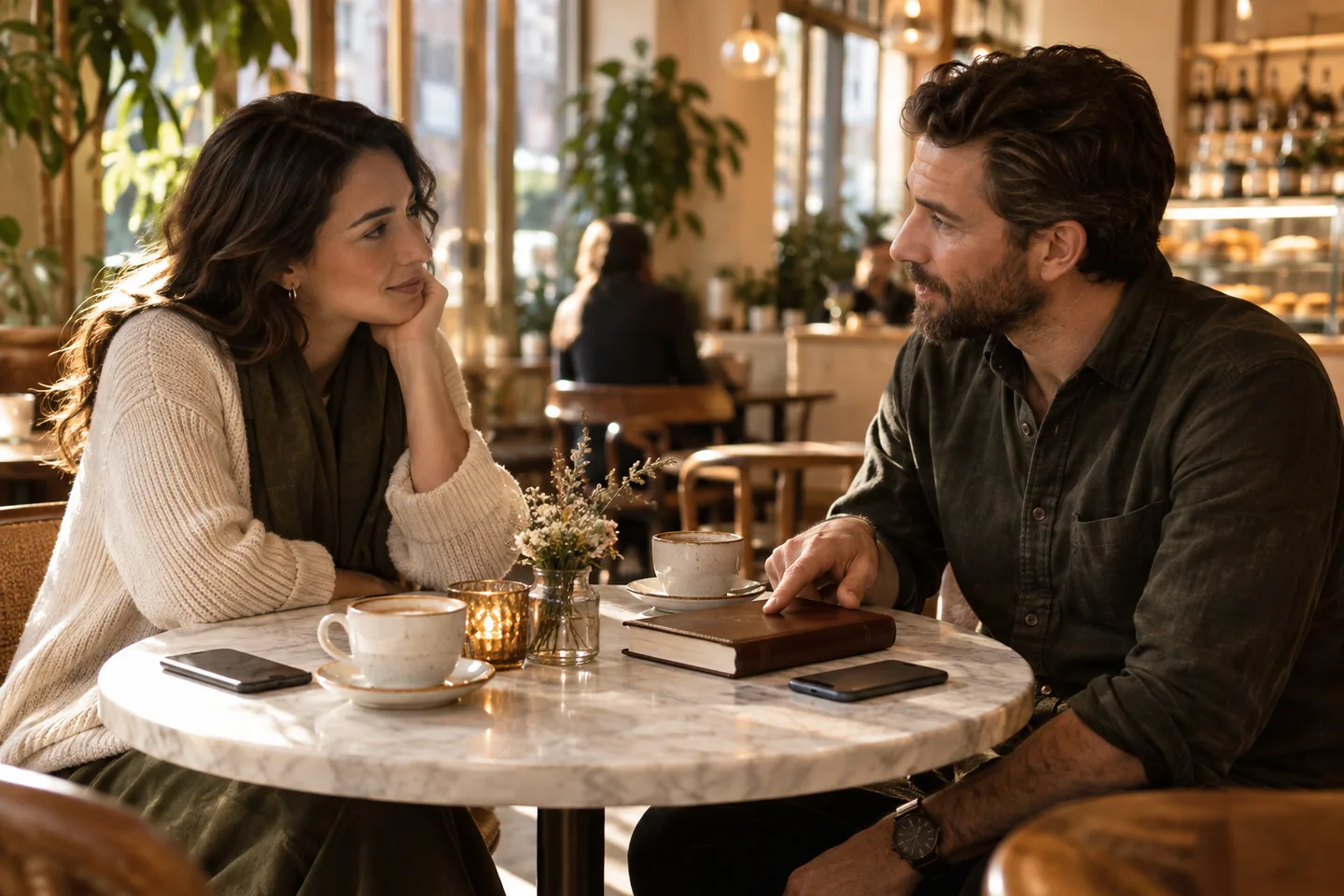
If conversation helps, explain the passage briefly to a willing adult reader. Name the reference, describe its movement, and say which question you have not answered. Invite the other person to check the text with you. You are comparing readings rather than asking them to judge how much faith your memory demonstrates.
BibleProject discusses communal Scripture reading within its own Christian account of the biblical story. That perspective can prompt a shared reading, without making every group’s interpretation interchangeable. If your discussion raises a disputed theological point, identify it as such and seek suitable study help instead of letting a memory exercise decide it.
When no partner is available, make a short spoken summary to yourself and check it afterward. Keep this distinct from presenting the Bible as a message privately addressed to another person. The purpose is to make your understanding inspectable. A listener may notice that you omitted the ending, confused two scenes, or supplied a motive that the text never names.
Finish with a useful limit and a next step
Before closing, check that your note has a precise reference, an identified translation, your own summary clearly labelled, one correction if needed, and a question that can guide the next reading. Test whether you can explain why that question belongs to this passage. A beautiful page is optional; a clear way back is enough.
This routine cannot remove every reason reading is hard. An unfamiliar translation, fatigue, a difficult argument, or interrupted time may call for a smaller passage or different support. It is not an assessment of memory health, and forgotten details do not measure devotion. If the text remains confusing, spend the next session understanding it rather than trying to recall what you never understood.
End by choosing the next concrete action: reopen the same scene, continue into the next paragraph, or check a question with an appropriate source. Keep the action small enough to recognize when you return. Remembering a reading is useful when it brings you back to the text with greater accuracy and a clearer question, not when it produces a longer archive of unchecked notes.

Questions about remembering a reading
Do I need to memorize the exact words?
Not for this routine. Recall the passage’s movement in your own words and label it as a summary. If you quote Scripture, reopen the chosen translation and copy it accurately.
What if I remember nothing after closing the page?
Reopen a smaller complete passage and identify one action, contrast, or question. Try describing that detail before adding more. This exercise is a reading aid, not a test of devotion.
Does Psalia automatically review my notes?
This workflow uses the reader, saved verses, and searchable journal entries. It does not assume an automated review schedule, an interpretation checker, or guaranteed retention.
How many passages should I review?
Begin with one manageable passage and one later return. A small set you can check is more useful for this exercise than a growing backlog that you never reopen.