When should you return to a previous Bible passage?
Have you ever followed a reference in the middle of a Bible reading and found that you could no longer remember the question that sent you there? The next passage can be interesting enough to become a reading of its own. It helps to know how to return to a previous Bible passage while the first question is still fresh. Before you jump, decide which sentence you want to read again and what you hope the other passage will clarify.
For example, you might be reading a reply and want to know where its words come from. That gives you a small task for the second passage. When you return, read the reply with its question. If the second text opens another line of inquiry, save that for a later reading. Keep a scrap of paper at hand for the original address. You can try the same method in a printed Bible by marking both pages. The app can shorten the trip between them.
Capture a starting point you can recognize
Write the book, chapter and verse where you are about to leave. If you are in a discussion, record which edition everyone is using so an unfamiliar wording is easier to place. Add six or seven words of your own about what you were reading. For instance, you could write that a question was asked just before a reply. The note tells you whether to look above or below the verse when you return. This is often more helpful than knowing the exact line that was at the top of your screen.
Then write the question in one line. A question about what happened before an event gives you a different reason to travel than a question about the source of a quotation. Leave the question visible while you open the second passage. If you have already started moving around, recover the last complete thought you remember and label it as your new starting point. That makes the rest of your detour easy to explain.
Go to one destination inside the reader
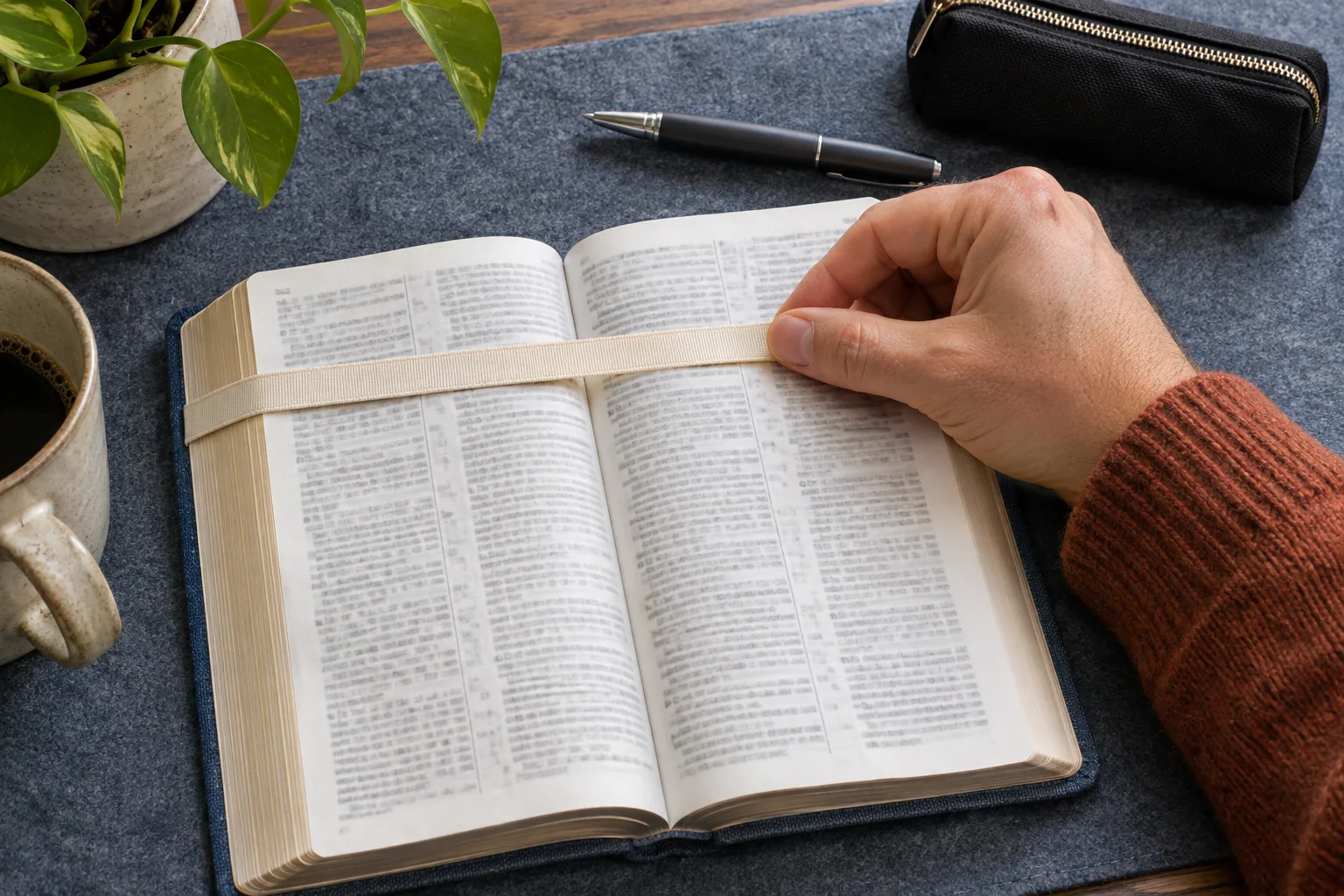
In Psalia, first open the starting passage and bring the verse you want into view. Then use the passage picker and choose the book, chapter and verse for the destination. When the reader opens the second passage, look near the top for an arrow and a Bible reference. The large control shows the destination it can take you to. A return to Matthew should show a Matthew reference. You can read the label before tapping so that you know which leg of the journey the control represents.
The chapter controls follow the order of the book. The trail follows the places you have actually opened in this reading session. Those directions differ when you jump between books. There is a similar distinction between a previous location and an adjacent chapter in the documentation for other Bible software, which can help when you switch readers. Logos’s navigation help
Read a short stretch before using the return arrow
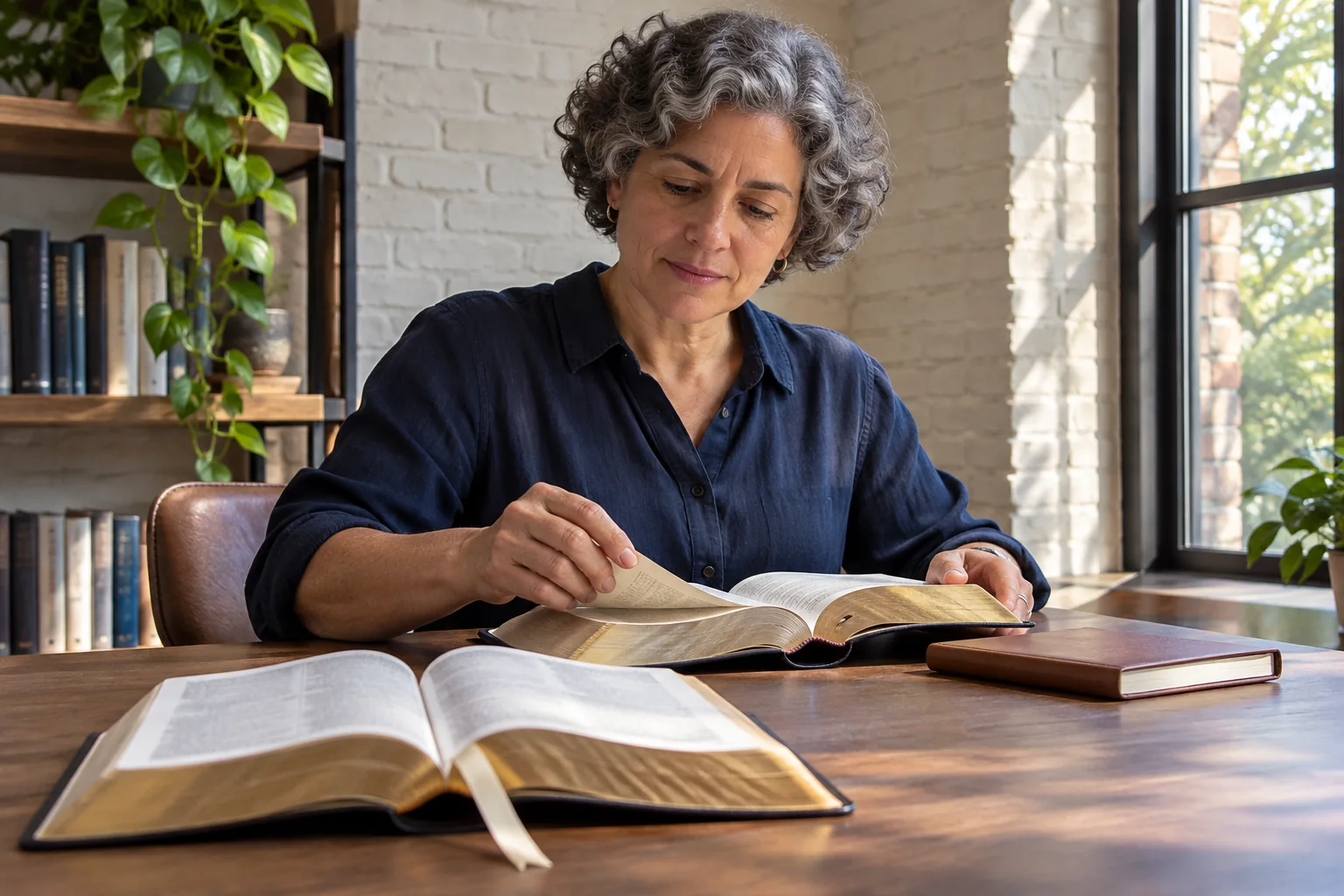
At the destination, begin a little before the verse that brought you there. Read through the related line and one sentence after it when that helps finish the thought. Ask who is speaking and what the speaker is addressing. Write down one piece of evidence that you can point to. This practice keeps the stop brief enough for you to remember the first passage while giving the second passage a fair reading.
When you tap the return arrow in Psalia, check the displayed reference and find the beginning of the sentence you marked. The reader can update your active place as you scroll. That means the reference used later to go forward can reflect where you finished reading at the destination. If you see a forward arrow after returning, use it when there is a specific line you still need to check. Once you open a different destination from there, Psalia starts a new branch and the earlier forward route is cleared. Keep any address you intend to visit again in your notes.
Try Matthew’s reply and the reading about manna
3The tempter came and said to him, “If you are the Son of God, command that these stones become bread.”
4But he answered, “It is written, ‘Man shall not live by bread alone, but by every word that proceeds out of God’s mouth.’”
Read Matthew 4:3–4 in the World English Bible. The question for the trip is simple. What happened in the passage from which Jesus draws his reply about bread? Note Matthew 4:4 as the starting point. Open Deuteronomy 8:3 with the passage picker and also read verse 2. The speaker there asks the people to remember a journey. Verse 3 recalls hunger and the gift of manna. For a longer reading, the Deuteronomy book guide places that address within the rest of the book.
Write a short observation about the two scenes. In the passage you visited, a people is being asked to remember its experience in the wilderness. In Matthew, a particular demand about stones and bread prompts Jesus’ reply. Tap the arrow for the earlier Matthew reference. Read verse 3 along with verse 4 once more. The reference trip helped you identify what the reply draws on. As a final check, say how the question in Matthew differs from the setting Moses recalls. You should be able to point to one verse in each passage without needing to claim that the scenes are identical.
Try John’s comparison and the event Moses recalls
14As Moses lifted up the serpent in the wilderness, even so must the Son of Man be lifted up,
15that whoever believes in him should not perish, but have eternal life.
Read John 3:14–15 in the World English Bible. This time the first passage names something a person did. Mark John 3:14 and ask what Moses lifted and where that action fits in the earlier narrative. Go to Numbers 21:8 with the passage picker. Read through verse 9. Then look back briefly at the people’s trouble in the verses just before it. The guide to Numbers gives you a way to place this episode within the journeys the book describes.
Identify the shared action in a short note. In Numbers, Moses sets the serpent on a pole. In John, that action appears in a comparison that continues into the next verse. Return to John and read through verse 15, then through verse 17 if you want to stay with the paragraph. In a group, let one person name what the earlier text explains and another read what John’s comparison goes on to say. The destination provides the scene behind the image. The return gives you the sentence that uses the image, including the purpose introduced in verse 15.
Use a short route when the order starts to blur
Sometimes your reading has three stops. You open the first passage, jump to the second and then follow a reference from there. When you press back once, the second stop may be the previous place. Read the displayed address closely. If it is only an intermediate stop, keep returning one step at a time until the first book and verse are in view. A two-line note with the origin and each destination in order is usually enough to keep the sequence clear.
The trail is bounded and lives in the current reader session. If the bar is hidden while the reader is in focus mode or while a passage selection is active, leave that mode or end the selection to see the ordinary reading controls. There may be no previous entry at the beginning of a session. In that case, reopen the address from your note. Durable reading places, bookmarks and journal notes can serve longer-term purposes. Use a written reference when you want to be able to continue independently of the session.
Keep the kind of connection in your notes
A useful reference note says how the passages are related. Matthew introduces a written reply, while John compares a named action with something in the current discussion. Those relationships call for different notes. In the first case, write what the older passage asks hearers to remember. In the second, name the earlier action and then look for the words that take the comparison further. If you have just found similar vocabulary, leave yourself room to check whether the passages actually belong together.
Use a pair of sentences in a discussion. Start with what any reader can verify in the text. Follow with the interpretation you are considering. Someone should be able to ask where your first sentence came from and get a specific answer. If the visit generated a new topic, write its address on a fresh line so you can come back later. That separates the question you took on from the other things the reading made you curious about.
Try putting the addresses on opposite sides of the page with the original on the left. Beneath the second address, keep only the event or wording that answered the question. If you find yourself copying half the destination passage, stop and name the smallest piece that helps you read the first passage again.
Close the visit with one clear return
Before ending the session, read the starting reference aloud and check the sentence on both sides of it. Say the destination and the question that took you there. Then say which part of the destination you would show another reader. If you can answer all three from your notes, you can repeat the reading later from either a paper Bible or the app. If you cannot tell where the idea came from, put a question mark next to it and keep the two addresses.
Choose the next thing to read in the first passage. It may be the rest of a speech, another action in the story, or one sentence that completes the thought you interrupted. The useful result of the trip is local and concrete. You are back at the text you were reading, you can identify the line you wanted to check, and you know what you want to do next.
Questions about returning to a passage
Will back take me to Scripture in book order?
It follows previous places in the reading trail. Check the displayed book and verse. To go to an adjacent chapter, use the chapter controls.
Why did the forward arrow disappear?
After you return, a new jump clears the forward route. Save the previous destination’s address if you still want it.
Can I use the same trail tomorrow?
Treat it as a tool for the active reader session. Write a reference and the question you were checking for a later visit.
Do I have to follow a built-in cross-reference?
You can choose the second book, chapter and verse yourself in the passage picker. The examples here use known references so you can practice the return.