

Read the Road to Emmaus as a whole
In Luke 24, the Road to Emmaus begins with two people walking away from Jerusalem and ends with them returning to a group already talking about the risen Jesus. Between those two movements, they tell a stranger what has happened, hear him explain Scripture, invite him to stay and recognize him as he breaks bread. Keep the order in view. It matters that they can recount the reports about the tomb long before they know who is walking with them.
Read Luke 24:13–35 once without stopping. If you want the wider setting, start with the women at the tomb earlier in the chapter, or open the overview of Luke’s Gospel. On the second read, set out four markers: conversation, Scripture, table and return. Leave room beneath each to write what the two disciples know at that point. At the end you can see where new information arrives and where a scene changes the way they understand what was already said.
Hear what the travelers have brought with them
Verses 13–16 put the travelers and the reader in different positions. Luke identifies Jesus when he draws near and walks with them, but the two do not recognize him. When Cleopas addresses him as a stranger, you already know the name that Cleopas is missing. Try reading these first lines as if you had to retell the scene to someone who cannot see the page. Your retelling should carry both the identification Luke gives you and the uncertainty the travelers still have.
Give their conversation its own space. They are discussing recent events before Jesus speaks. The text names Cleopas and leaves the other traveler unnamed. We hear their words and see what they do without being given a full account of their reason for leaving or the name of the other companion. A margin note can record what the passage actually tells you: two people are talking as they go, a third joins them, and recognition has yet to happen. Leave other details open.
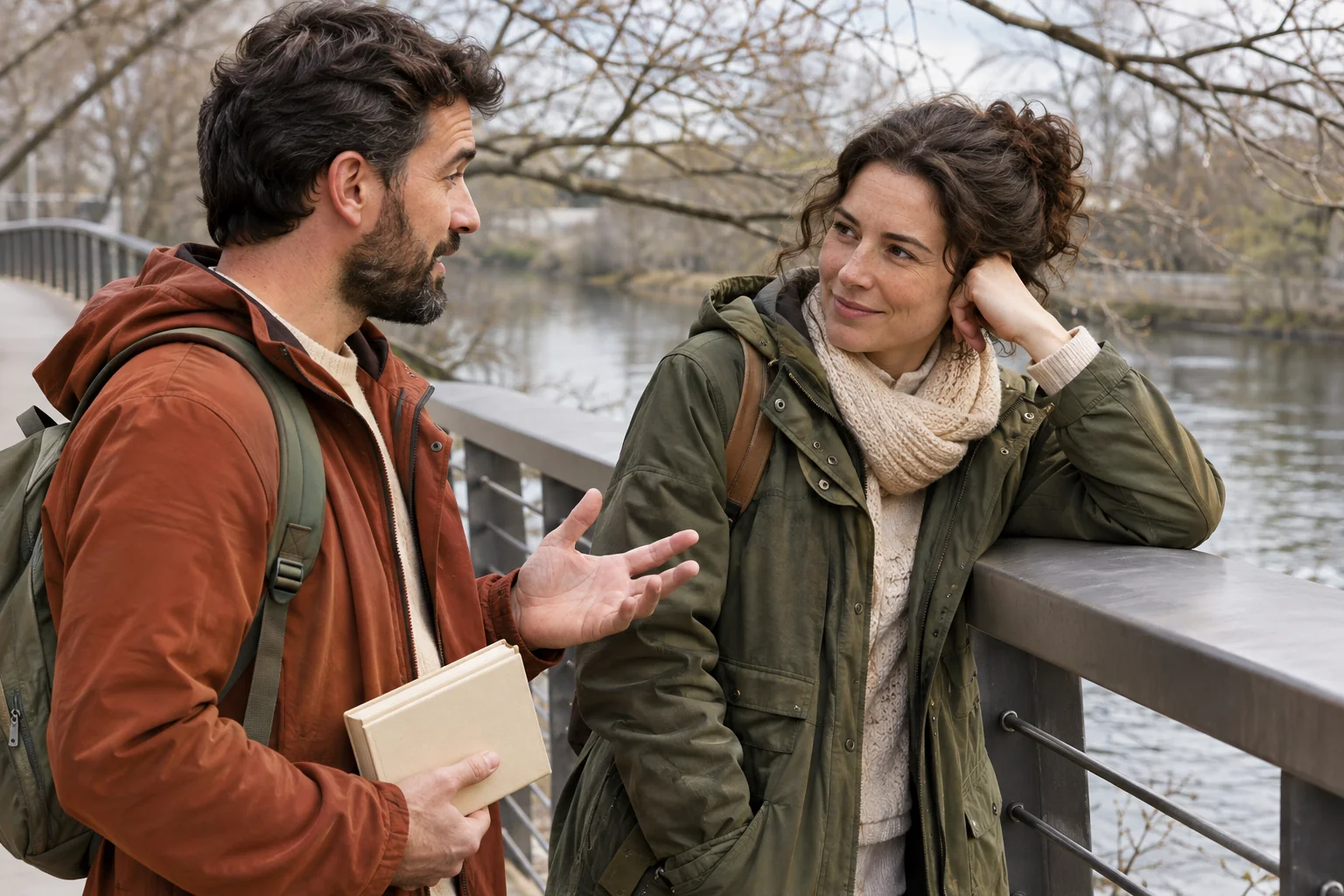
Worked reading of the questions on the road
17He said to them, “What are you talking about as you walk, and are sad?”
18One of them, named Cleopas, answered him, “Are you the only stranger in Jerusalem who doesn’t know the things which have happened there in these days?”
19He said to them, “What things?” They said to him, “The things concerning Jesus the Nazarene, who was a prophet mighty in deed and word before God and all the people;
Read Luke 24:17–19 in the World English Bible. Write down each turn in the conversation: the question from Jesus, the question back from Cleopas and the brief invitation to explain. Mark which person speaks and what they assume the other person knows. In the narrative, the one Cleopas thinks needs to be told about Jesus is Jesus himself.
Now follow the answer through verse 24. In three lines, record what the travelers recount about Jesus’ death, what they hoped about Israel and what they report about the tomb. Keep the report from the women in the story. The travelers say that others found things at the tomb as the women had said, and that those visitors had not seen Jesus. A useful summary distinguishes between the events the travelers describe, the hopes they bring to the account and the reports they have heard. Read their answer once more before moving on. You can hear why the encounter that follows begins with more than the delivery of a missing fact.
Let the explanation of Scripture have its place
Verses 25–27 change who is doing the explaining. The travelers have told their story; Jesus speaks about suffering and glory and begins from Moses and the prophets. Notice that they still have not recognized him at this point. That lets the reader track something besides the disclosure of his identity. The same events they have just narrated are now set in relation to the Scriptures.
Luke gives the range of the reading and what it concerns. He leaves the individual passages and the full explanation unrecorded here. If a study Bible or a teacher proposes passages that might help, identify those as suggestions for reading. Keep them separate from the details Luke reports. The USCCB’s notes on Luke 24 offer one Catholic reading of how this scene fits the resurrection chapter. For your own note, consider one question the exchange raises: what place had the travelers allowed for suffering in the hope they described?
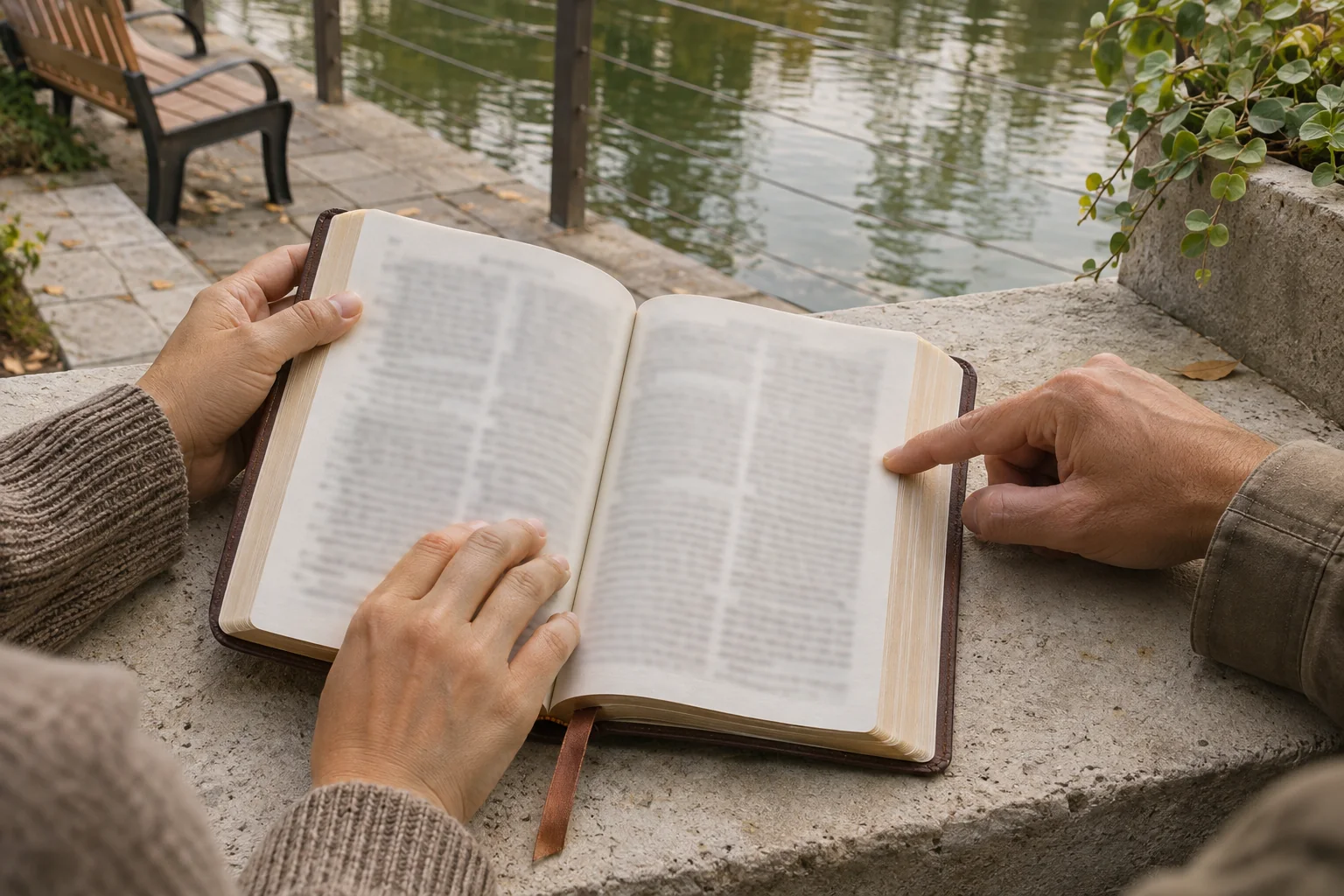
Notice how the invitation changes the scene
The evening brings a decision at the edge of the village. Luke says Jesus acts as if he would go farther. The travelers urge him to stay because the day is nearly over, and he goes in with them. Their words respond to the ordinary circumstances of a journey. At this point in the story, they have offered a place to a companion they don’t yet identify as Jesus.
To follow this transition, put a short line between the road and the table on your page. On the road, the company continues moving while they speak. At the village, the invitation makes it possible for them to sit down together. This small detail is easy to pass over when you already know the scene at the table. Reread the invitation and ask how it belongs to the sequence. You can acknowledge its significance without turning hospitality into a claim that a particular act will always produce a particular spiritual experience.
Worked reading of the opened eyes and the remembered road
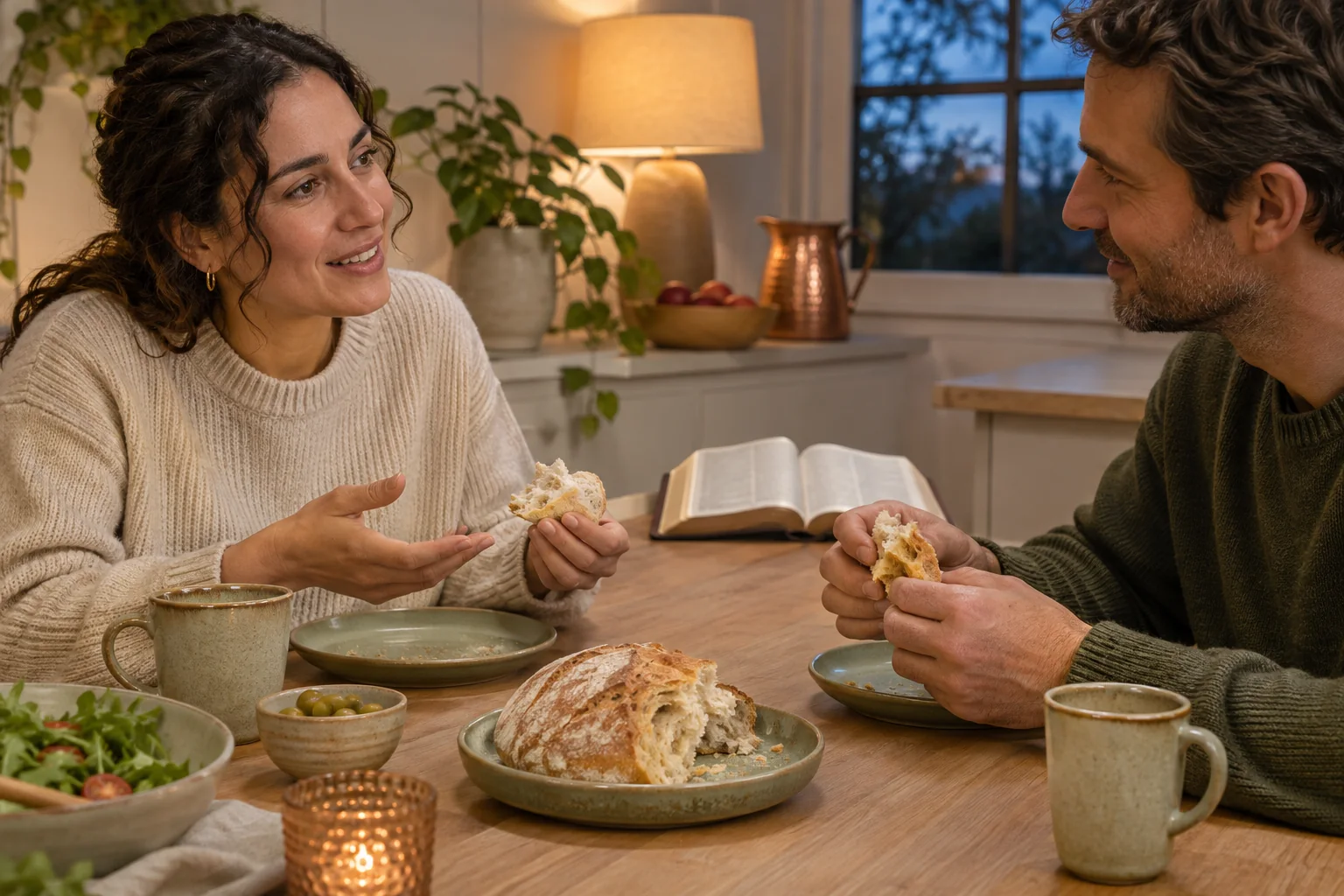
30When he had sat down at the table with them, he took the bread and gave thanks. Breaking it, he gave it to them.
31Their eyes were opened and they recognized him; then he vanished out of their sight.
32They said to one another, “Weren’t our hearts burning within us while he spoke to us along the way, and while he opened the Scriptures to us?”
Read Luke 24:30–32 in the World English Bible. Note the actions at the table in verse 30, then the recognition and disappearance in verse 31. Put verse 32 on a separate line. There the travelers look back at the road and ask each other about their hearts as Jesus spoke and opened the Scriptures.
Say the two moments in your own words. At the table they recognize the person who was with them. Afterward they speak about what the earlier conversation had been like. This simple ordering helps if you have heard the burning heart line used on its own. The feeling is something the two name when they look back together; the story does not treat an intense feeling as a reliable method for identifying the truth of any interpretation. In a group, have one person read verses 30–31 and another take verse 32 aloud after a pause. Ask what the travelers can now name that they could not name when they were still on the road.
Follow them back to a conversation already under way
Keep reading through verse 35. They rise in that very hour and return to Jerusalem, where the eleven and their companions are together. Before the travelers’ report closes the scene, the group already speaks of the Lord’s resurrection and his appearance to Simon. What the travelers saw becomes part of an exchange of reports. A short summary that stops at the breaking of bread loses the way Luke rejoins the two travelers to the people they find in the city.
Try three lines in your notebook: what the gathering says, what the travelers tell, and where the next scene begins. The report about Simon does not come from the two travelers’ experience at the table. Their own report includes what happened on the way and how they recognized Jesus in the breaking of bread. If you have time, read on through verse 36 and notice how the next scene follows that exchange. A separate guide to reading a verse in context can help you decide where to stop for the day.
There is a useful way to test your summary of the closing scene. Ask whether someone who heard it would know there were people speaking before the two travelers told their story. If the city sounds like an empty destination, name the gathering and its report. This gives the table its full narrative consequence. The travelers go back and add their account to news that has already reached others.

Keep the meal and its later readings distinct
Christians have returned to this table scene in many settings. In Catholic reading, for example, the way Scripture is explained on the road and bread is broken at the table can be read alongside the liturgy. Other readers may emphasize a shared meal and hospitality or the way Luke identifies the risen Jesus through his actions. Whatever connection you bring to the scene, first describe what is narrated in verses 28–35. That makes it easier to say which part of your reflection comes from the text and which part belongs to a tradition’s reading of it.
The same care applies to geography. Luke names the village and gives a distance in the edition quoted here. This reading exercise follows the movement between places in the story. It does not depend on locating the modern village, imagining the precise road surface or filling in the layout of the room. You can reconstruct the order of events with a few notes and without drawing a historical map.
A final check before you close Luke 24
Tell the episode in four sentences, with a reference next to each. Start with what the travelers describe, follow what Jesus explains, note when they recognize him and finish with the reports that meet in Jerusalem. If your summary begins and ends with one familiar phrase, read the lines on either side of it again. The two worked readings give you places to check: the questions in verses 17–19 and the shift from the meal to looking back in verses 30–32.
Finally, leave yourself one question grounded in a verse. For example, what changes between the end of the travelers’ first report in verse 24 and their report in verse 35? Answer in your own words and point to the line that supports you. If you read it again with another person, invite them to show where they see that change. The goal is a retelling you can check together and revise when you notice something more in the text.
Questions about the Road to Emmaus
Where is the Road to Emmaus story?
The episode is Luke 24:13–35. It follows the account of the empty tomb and leads into the next appearance in Jerusalem.
Who were the two travelers?
Luke 24:18 names Cleopas. The other traveler is not named in this passage.
When do the disciples recognize Jesus?
Luke 24:30–31 places recognition at the meal. Jesus takes the bread, gives thanks, breaks it and gives it to the two disciples.
Which passages did Jesus explain on the road?
Luke 24:27 mentions Moses and the prophets and says Jesus explains what concerns himself. The verse does not supply a list of individual passages.